





Quick answer
Federal contracting records reviewed in early May 2026 show ICE deploying about 330 officers and support staff to coworking-style offices in more than 40 states and Puerto Rico. The buildout is quieter than the 2025 urban sweeps, but broader — reaching small towns and mid-size cities that have had little day-to-day ICE presence in years. Mixed-status families have a 30-day window to refresh document custody, family communication plans, and counsel relationships before the new posts go fully operational.
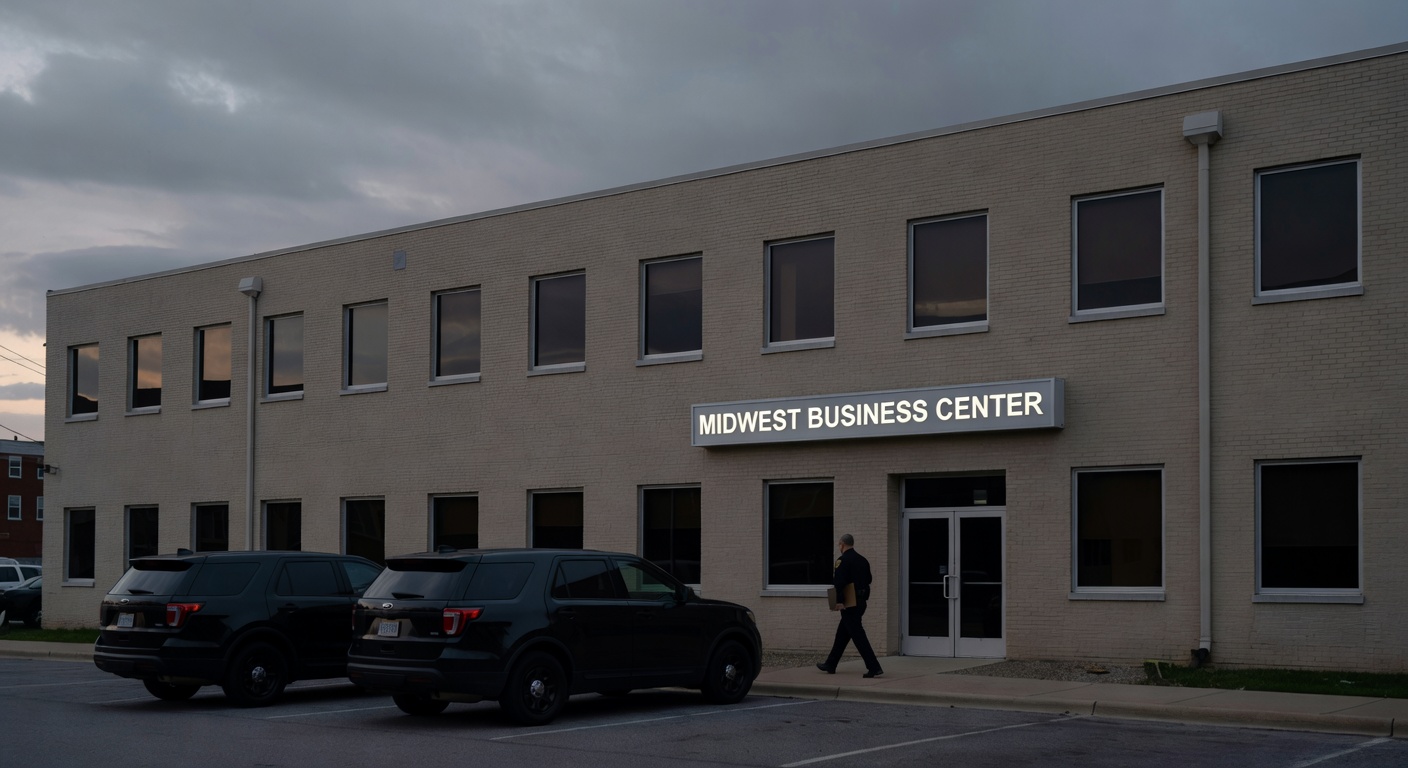
On May 7, 2026, USA TODAY reported that hundreds of newly hired and reassigned Immigration and Customs Enforcement officers are being deployed to leased coworking-style offices across more than 40 states, including small towns like Derby, Vermont; Caribou, Maine; Concho, Arizona; Manhattan, Kansas; and Hot Springs, South Dakota. The records reflect federal lease and workspace contracts on sam.gov, not detention construction, and they describe office desks, not beds. Texas is set to receive the largest single bloc of about 49 personnel; other named cities include Houston, Miami, Atlanta, Baltimore, Nashville, and Seattle.
By itself, an officer deployment is a logistics story. In context, it is something more. The administration has spent the past several months explicitly stepping away from the high-profile, military-style urban sweeps that drew bipartisan criticism in 2025. New Department of Homeland Security Secretary Markwayne Mullin told Newsmax on May 9 that the goal is to "get DHS out of the headlines" while continuing detention and deportation at the same pace. Border czar Tom Homan, speaking at the Border Security Expo in Phoenix on May 5, told an audience: "You ain't seen [expletive] yet. You will see more ICE agents than you've ever seen before."
For families with mixed immigration status, employers with foreign-national workers, and lawful permanent residents with old convictions on their records, the practical question is not whether enforcement is increasing. The contracting records, the funding levels, and the public statements all answer that. The practical question is what to do in the next 30 days. This article walks through what the new posture actually changes, the legal authorities ICE is operating under, and the concrete steps families and employers can take this month.
What the contracting records actually show
The deployment surfaced in federal purchasing data on the government's contracting portal, sam.gov. The records describe roughly 330 positions distributed across more than 40 states and Puerto Rico, with each location receiving anywhere from one or two officers to several dozen. The contracts are for coworking and shared-office desk space — companies like Regus, WeWork, and Industrious operate many of these facilities — rather than the dedicated federal building or detention facility that earlier ICE expansions have used. That choice is itself a signal: the agency is moving fast, prioritizing speed over permanence, and is willing to operate out of unbranded commercial space rather than wait for purpose-built offices.
What we can extract from the public records:
- Texas leads. Approximately 49 personnel are slated for Texas alone, with deployments to Houston, Dallas-Fort Worth, San Antonio, and several smaller cities. Texas already has substantial ICE infrastructure; this expansion thickens the network in mid-size cities that have historically been served from Houston or San Antonio.
- The geographic spread is striking. Listed locations include not just expected cities but Manhattan, Kansas; Concho, Arizona; Hot Springs, South Dakota; Caribou, Maine; and Derby, Vermont. Several of these towns have populations under 10,000 and are hours from the nearest existing ICE field office.
- Mid-size cities feature heavily. Nashville, Baltimore, Atlanta, Miami, and Seattle are each scheduled to receive new personnel. These are cities where ICE has had a presence but where day-to-day enforcement activity has been comparatively modest.
- The offices are explicitly not detention. The contracts cover desks, conference space, and parking. Detention capacity is being expanded through separate budget lines, including the supplemental funding from the 2025 reconciliation package.
USA TODAY's reporting noted that the records do not make clear how many of the 330 are new hires versus relocations. DHS has previously stated that ICE staffing doubled from roughly 10,000 to about 22,000 between January 2025 and early 2026, funded by the $170 billion immigration enforcement appropriation in the One Big Beautiful Bill Act. The May 2026 deployment is most plausibly a piece of that larger buildout becoming visible through real-estate contracts.
Quick context
Coworking-style ICE offices are a model rather than a one-time experiment. The agency has used similar leased space before, but never at this geographic scale. For families and counsel, the practical effect is that an "ICE office" may now sit in an unmarked suite in a Class B office building, two miles from a high school, with no signage. That changes how the public encounters the agency on a day-to-day basis.
Why this version of enforcement looks different
In 2025, ICE enforcement was visible. Operation Midway Blitz in Chicago, the Los Angeles deployment that brought federal agents and military assets onto downtown streets, and a series of high-profile worksite raids drew sustained national coverage. After two American citizens, Alex Pretti and Renee Good, were fatally shot during immigration-sweep protests in Minneapolis in January 2026, the White House promised what it called a "softer touch." Secretary Kristi Noem was replaced by Markwayne Mullin in March. The visible large-scale urban sweeps largely stopped.
The May 2026 deployment is, in plain terms, the operational version of that pivot. The strategy now is not flashy enforcement actions in front of news cameras; it is sustained, distributed pressure across a much larger geographic footprint. Mullin's own description — that DHS wants to be "a little more quiet" while not "slowing down even a little bit" — is consistent with what the contracting data shows.
For mixed-status families, three operational implications follow:
- Enforcement will reach places it usually has not reached. A family in central Kansas or rural Vermont that has been outside the high-attention zones for years will, in 2026, be inside the network. The driving violation that produced a fingerprint at a county jail in 2018, or a 2014 misdemeanor that quietly stayed in the database, may surface now.
- Targets will skew toward administrative arrests rather than scheduled raids. The 330 officers are not staging large-scale operations. They are conducting one-by-one and small-group enforcement: home arrests, check-in detentions, courthouse arrests, and worksite encounters often paired with state-level traffic stops.
- The information lag for families will grow. A loved one arrested in a city where ICE has never had a visible office may end up in a detention facility four states away within 48 hours. The Online Detainee Locator, which can already lag by 24 to 72 hours, will be the only public visibility for the family.
The legal authorities ICE is using
Most interior ICE arrests are administrative, not criminal. The core authority is in the Immigration and Nationality Act § 287 and 8 U.S.C. § 1357. Under those provisions, an immigration officer may interrogate any person believed to be a noncitizen as to that person's right to be in the United States and may arrest without a warrant any noncitizen the officer has reason to believe is in the country in violation of law and is likely to escape before a warrant can be obtained.
The two warrant types families and employers need to be able to tell apart:
- Administrative warrant (Form I-200 or I-205). Signed by an ICE supervisor, not a judge. Authorizes ICE to arrest the named person, but does not authorize entry into a home or other non-public area without consent. Form I-200 covers warrant of arrest for an alien; Form I-205 covers warrant of removal/deportation. Both are common; neither is a judicial warrant.
- Judicial warrant. Signed by an Article III judge or federal magistrate. Authorizes entry into a private residence on the terms stated in the warrant. Rare in immigration enforcement. If officers present a judicial warrant at a door, the residence loses the constitutional protection that otherwise blocks entry; if they present only an administrative warrant, the resident may decline to consent to entry and the officers should remain outside.
Two adjacent authorities matter in 2026 more than they did a year ago:
- 287(g) agreements. Local law-enforcement agencies — most often county sheriffs — that have entered 287(g) agreements with ICE can perform certain immigration functions within their jurisdictions. The number of active 287(g) jurisdictions has grown substantially since 2025. A traffic stop or local arrest in a 287(g) county can produce an immigration hold within hours.
- Expedited removal. A January 2025 executive action expanded expedited removal under INA § 235(b)(1) to the full statutory scope: noncitizens encountered anywhere in the U.S. who have been present for less than two years and cannot prove continuous presence may be removed without a hearing before an immigration judge, subject to limited credible-fear exceptions. The practical impact has been an increase in rapid removals after interior arrests, particularly of people who do not have documents proving long-term presence.
The sensitive-locations policy, which since 2011 had limited ICE enforcement at schools, churches, hospitals, and similar places, was rescinded on January 21, 2025. ICE now operates under guidance that authorizes enforcement at those locations when the supervising officer determines it is appropriate. Individual institutions can and do enforce their own access policies on private property, but families should plan as if school pickup, medical visits, and houses of worship are no longer categorically off-limits to ICE under current federal policy.
Know-your-rights, refreshed for the 2026 posture
The basic constitutional rights have not changed. What has changed is how often ordinary families will encounter ICE in their lives. The following are the situations in which a misstep most often turns a manageable situation into a removable one.
If ICE comes to your door
Do not open the door. Open a window or speak through the door. Ask whether they have a warrant signed by a judge. If they do, ask them to slide it under the door or hold it up to a window. Read it carefully: a judicial warrant will have the name of a federal court and a judge's signature; an administrative warrant will be signed by an ICE supervisor and will say "Department of Homeland Security" or similar. Without a judicial warrant, you do not have to open the door. You may say: "I do not consent to your entry." Stay silent beyond that point. Do not lie about who is in the house. Do not produce false documents. Call an attorney.
If ICE stops you in public
You have the right to remain silent. Officers may ask your name; in most situations you can decline to answer questions about country of origin, immigration status, or how you entered the U.S. Do not produce false documents. Do not produce a foreign passport unless you are certain of the consequences. Carry a small card with the phone number of an immigration attorney. If you are taken into custody, repeat: "I want to speak to a lawyer. I do not wish to answer questions."
If ICE comes to your workplace
Officers can enter the public areas of a workplace freely. They can enter the non-public areas — production floors, break rooms, back offices — only with the consent of someone with authority to give it, or with a judicial warrant. Front-desk staff should know the difference between warrant types and should be trained to call ownership or counsel before allowing entry to non-public areas. Workers retain the right to remain silent. Employers should not direct workers to answer questions or produce documents in front of ICE; that direction can itself create exposure.
If ICE arrests you at the courthouse
Courthouse arrests have been legal as a matter of federal policy since the 2018 Cuccinelli memorandum. They have increased under the 2025 ICE guidance. Some state and local courts have adopted their own rules limiting cooperation, but those rules do not bind ICE. If you have a state court matter pending and you are unsure of your immigration status, talk to an immigration attorney before the court date.
Signing nothing
The single most expensive mistake people in ICE custody make in the first 24 hours is signing documents put in front of them by officers. A voluntary departure form, a stipulated removal order, a withdrawal of an application for admission, and a Form I-826 ("Notice of Rights and Request for Disposition") can each foreclose major legal options. Decline politely. Say: "I want to speak to a lawyer before I sign anything." That sentence is not magic, but it is your right, and it is the right answer.
What mixed-status families should actually do in the next 30 days
The 30-day window before the new deployment posts are fully operational is the right moment to do the preparation work that families always intend to do and rarely complete.
Carry valid status documents
Anyone with a green card, EAD, advance parole, or other status document should carry it. Photocopies are not a substitute, but a household should also keep clear photocopies in a known location and in a shared cloud folder. Lawful permanent residents are required by 8 U.S.C. § 1304(e) to carry the green card. Failure to do so is a misdemeanor.
Memorize the A-number and an attorney's phone number
The first piece of information any family member needs after a detention is the detainee's A-number. Children old enough to understand should know it. The second is the phone number of an immigration attorney who has agreed to take the call. A small laminated card in a wallet is enough.
Sign powers of attorney for childcare and finances
If a parent is detained, who picks up the children that afternoon? Who pays the rent the following week? Who signs the school release form? Powers of attorney for childcare and short-term financial decisions take an hour to prepare and prevent a cascade of secondary crises. Mixed-status households should designate U.S. citizen or lawful permanent resident family members where possible.
Designate a single family contact
Pick one person — by name — who will be the contact for the attorney, the consulate, and the facility. That person keeps a log. Calls cycle quickly; the person on duty next week often has no idea what was said this week. The log is the institutional memory.
Build a documents folder now, not later
Birth certificates, marriage certificates, tax returns for the last five years, proof of U.S.-citizen family relationships, school enrollment records for children, medical records for anyone with serious conditions, employer letters, lease or mortgage documents, and country-conditions evidence for any future asylum claim. Scanned, stored in a single cloud folder, with access granted to the designated contact and any retained attorney.
Brief the household — including the children — on the door
What does an 8-year-old say when an adult in plain clothes knocks during the school day? The right script is "I'm not allowed to open the door. Please leave the paperwork outside." A 14-year-old should know to call the designated family contact, not to engage. The brief is uncomfortable; it is also load-bearing.
Worksite exposure: I-9, M-274, and the rising audit pace
Employers in 2026 face a parallel set of risks. The Department of Homeland Security has resumed Form I-9 audits at a pace not seen since the 2018–2019 cycle, and a growing share of worksite enforcement actions begin with an I-9 audit rather than a raid. The legal exposure for an employer can include civil monetary penalties under 8 U.S.C. § 1324a, debarment from federal contracting, and criminal liability for a knowing-hire pattern.
The minimum compliance posture this month:
- Internal I-9 self-audit, ideally conducted under attorney supervision so that the work product is protected. Confirm Form I-9 for every current employee, address Section 1, Section 2, and any reverification entries, and document any corrections per Form M-274 (Handbook for Employers).
- E-Verify mismatches: any tentative non-confirmation that has been sitting in a file for months should be addressed. The audit window has narrowed.
- Front-desk training on warrant types. Front-desk staff should not consent to entry to non-public areas. They should call ownership or counsel and remain polite, factual, and silent on operational questions.
- Workforce communications: workers should know that they have the right to remain silent and the right to speak to a lawyer. Employers should not direct workers on what to say to ICE; that direction itself can create liability.
For employers in industries that depend on H-2A, H-2B, or H-1B workers, the risk profile is different but real. A single noncompliant I-9 can trigger a broader visa-program audit. The 2026 H-2B supplemental cap announcement from USCIS reaffirmed the program's continued operation, but the agency has also signaled tighter enforcement of program-integrity rules.
What to do in the first six hours after an arrest
The first six hours after an arrest set the trajectory of the case. Specific actions to take:
- Collect identifying information. The detainee's full legal name, date of birth, A-number, country of citizenship, the location of arrest, the time of arrest, the names of any officers, the agency identifier on any paperwork.
- Identify witnesses. Anyone who saw the arrest. Get phone numbers.
- Call counsel. The phone number on the wallet card. If counsel is not yet retained, call any immigration attorney in the relevant city or any major nonprofit immigration program (Catholic Charities, RAICES, AILA's referral service).
- Check the ICE Online Detainee Locator at locator.ice.gov. Use the A-number plus country of birth, or name plus country plus date of birth. Expect a 24–72 hour data lag.
- Identify the ERO field office. The Enforcement and Removal Operations field office covering the arrest location is the unit with operational responsibility. It has a public phone line and a Deportation Officer assigned to each detainee.
- Open a deposit account with the facility's phone provider. Securus, GTL, ViaPath, or similar. The detainee will need to be able to receive attorney calls.
- Do not sign anything. No voluntary departure, no stipulated removal, no Form I-826 disposition, no G-28 substitution without counsel.
- Do not produce documents to ICE. Documents go to counsel, who decides what is produced and when.
Bond, removal, and the smaller-city immigration courts
If a detainee is held under 8 U.S.C. § 1226(a) — the standard pre-removal detention authority — they are eligible for a bond hearing before an immigration judge. The factors the judge weighs come from Matter of Guerra, 24 I&N Dec. 37 (BIA 2006): fixed address, length of residence, family ties, employment history, criminal history, record of appearance, community ties, and manner of entry.
Two 2026-specific points change the playbook:
- The Fifth Circuit corridor. Many detainees arrested in the new deployment cities end up moved to detention facilities in Louisiana, Mississippi, or West Texas, all in the Fifth Circuit. The Fifth Circuit's detention case law is markedly more government-favorable than the Ninth Circuit's. The legal substance of the bond motion may need to be presented differently before a Louisiana immigration judge than before a California one.
- Smaller courts, faster calendars. Some detained-docket immigration courts in mid-size cities have unexpectedly fast bond-hearing schedules — a function of low filing volume, not policy. That can be a strategic advantage for a well-prepared bond motion filed early. Conversely, merits hearings can be set in weeks rather than months.
Detainees who entered the U.S. fewer than two years ago and who were arrested in the interior may be placed in expedited removal under INA § 235(b)(1), in which case the path to relief narrows significantly. Credible-fear and reasonable-fear interviews become the first real opportunity to be heard. Preparation for those interviews — with counsel, in advance, with country-conditions evidence — can be the difference between removal in days and a full asylum hearing.
A realistic vignette
The following is a composite. Identifying details are changed.
R.G. is a 41-year-old Mexican national who has lived in Manhattan, Kansas for 17 years. He is the father of three U.S. citizen children and is married to a U.S. citizen. He has no criminal history other than a 2019 traffic citation. He has been on USCIS's radar since 2009 because of a denied I-130 that was never reopened. For most of the past decade, ICE had no field presence in his small Kansas city.
In late May 2026, two officers in plain clothes visit R.G.'s home at 6:30 a.m. They identify themselves as ICE and present an administrative warrant of arrest for R.G., naming him and his date of birth. They ask to come in to "talk briefly." R.G.'s wife, who has read this article, does not open the door. She says: "I do not consent to your entry. We will be in contact through our attorney." She calls the family contact phone number and the immigration attorney within the next ten minutes. The officers leave a card.
The attorney's office files an I-589 affirmative asylum application that morning — preserving timing — and a Form G-28 with the Kansas City ICE field office in the afternoon. They request a check-in rather than a re-attempted arrest. The field office, after some back-and-forth, agrees to a check-in three weeks later. R.G. appears, accompanied by counsel, with bond evidence prepared. He is taken into custody but is released on a $7,500 bond at a hearing held the following week before the Kansas City immigration court. The merits case — whether to reopen the 2009 I-130 denial and pursue cancellation of removal — continues at the non-detained docket.
Two observations. First, the household's preparation — knowing the warrant types, having counsel's number memorized, keeping a documents folder current — saved the case at the door. Without that preparation, R.G. would likely have consented to entry, been arrested in the house, transferred to a Louisiana detention facility, and faced the bond hearing 1,000 miles from his children. Second, even with preparation, the case still required experienced counsel within hours. The preparation buys the time; counsel uses it.
What Modern Law Group is doing differently in 2026
Our firm has rebuilt its detained-docket and rapid-response practice over the last twelve months in response to exactly this kind of distributed enforcement. The core elements:
- Family preparedness consultations. A fixed-fee, single-session review of a household's exposure: status documents, A-numbers, prior immigration history, criminal-history exposure, family communication plan, and a printed playbook tailored to the household's facts.
- Employer I-9 and M-274 reviews. Conducted under attorney supervision so that the work product is protected. Identifies and remediates common defects before they become audit exposure.
- Rapid-response representation. A dedicated intake line for detained cases. Coverage for bond, venue, and habeas filings in any federal district. Familiarity with the Fifth, Ninth, and Eleventh Circuit detention case law, where most of the 2026 transfers terminate.
- Merits relief. Cancellation of removal under INA §§ 240A(a) and 240A(b), asylum, withholding of removal, T and U visas, VAWA, adjustment of status, and naturalization. The detention crisis is loud, but the underlying merits cases are still the long-term work.
None of this is a guarantee. It is what a serious immigration practice looks like when 330 new officers are about to be operational in places that previously had little ICE presence.
The 30 days that matter
The new ICE offices are not yet fully operational. The leases are signed; the officers are arriving; the operational playbook is still being written in the field. In 30 days, the picture will be different. Families that use this window to refresh documents, complete powers of attorney, build a communication plan, and identify counsel will face a different set of choices than families that wait until something happens.
The single most expensive mistake is the one we see most often: waiting until the moment of crisis to do the preparation that should have been done quietly the month before. The transcript of every detained-docket case we have ever handled would be shorter, and the outcomes better, if the household had taken one Saturday morning to do the work this article describes.
Related reading
- Know Your Rights When ICE Comes to Your Door
- ICE Home Arrests: How to Protect Your Family
- ICE Warrant vs. Judicial Search Warrant: How to Tell the Difference
- ICE Transferred My Loved One to Another State — What Families Can Do Next
- What Families Should Do When a Loved One Is Detained by ICE
Worried about the new ICE deployment in your area? Contact our immigration attorneys at Modern Law Group.
Frequently asked questions about the ICE deployment wave
How many ICE officers are being deployed in May 2026?
Federal contracting records reviewed by USA TODAY show approximately 330 officers and support staff being placed in coworking-style offices across more than 40 states plus Puerto Rico. The records describe office and desk space, not detention facilities. Texas is receiving the largest single bloc at about 49 personnel.
Will ICE start arresting people in small towns where they have not been visible?
The deployment specifically includes small communities like Derby, Vermont; Caribou, Maine; Concho, Arizona; Manhattan, Kansas; and Hot Springs, South Dakota. These are places that have had little day-to-day ICE presence in years. Families in those communities should not assume the historical absence will continue.
What warrant do I have to honor at my door?
Only a judicial warrant — signed by an Article III federal judge or magistrate, naming the residence and listing what may be searched — authorizes ICE to enter your home without consent. The administrative warrants ICE most often carries (Forms I-200 and I-205) are signed by ICE supervisors and do not authorize entry into a home over your objection. Ask to see any warrant slid under the door or held to a window before deciding.
Are schools and churches still off-limits to ICE?
No. The 2011 sensitive-locations memorandum was rescinded on January 21, 2025. ICE now operates under guidance that permits enforcement at schools, churches, hospitals, and similar locations when the supervising agent determines it is appropriate. Individual institutions can enforce their own access policies on private property, but federal policy no longer categorically restricts enforcement in those places.
If a family member is arrested, where will they be taken?
Initial booking often happens at a local jail under an intergovernmental service agreement with ICE. Within 24–72 hours, the detainee is frequently moved to a dedicated ICE detention center, often in Louisiana, Mississippi, Texas, Georgia, or Arizona. The Online Detainee Locator at locator.ice.gov can lag the actual transfer by up to 72 hours.
What is expedited removal and who is at risk?
Expedited removal under INA § 235(b)(1) allows removal without a hearing before an immigration judge. It now applies, as a matter of federal policy, to anyone arrested in the interior who entered the U.S. fewer than two years ago and cannot prove continuous presence. Carrying documentary proof of long-term presence — leases, utility bills, tax returns, school records — is the practical defense.
Should employers do an I-9 self-audit now?
Yes. The pace of Form I-9 audits is the highest it has been since 2018–2019, and a growing share of worksite enforcement begins with an audit rather than a raid. An attorney-supervised internal audit, with corrections documented per Form M-274, is the standard 2026 posture for employers with foreign-national workers.
What is the single most important thing my family should do this month?
Pick one person to be the designated emergency contact, give that person the A-numbers and attorney phone number for everyone in the household, build a shared cloud folder with status documents and family records, sign powers of attorney for childcare and short-term finances, and brief the household — including the children — on the door. The work takes a Saturday morning and saves cases.
Get Ahead of the New ICE Deployment
The 30 days before the new offices are operational is the right time to prepare. Talk to an experienced immigration attorney about your family's exposure, your status documents, and your communication plan.
Schedule a Consultation