





Quick answer
If ICE transfers your loved one to another state, treat the first 72 hours like an emergency logistics window: confirm the new facility, identify the assigned ERO officer, check which immigration court now has the case, protect any pending bond strategy, and get counsel positioned in the correct federal district if habeas may be needed. Do not wait for the Online Detainee Locator to catch up before preserving deadlines.
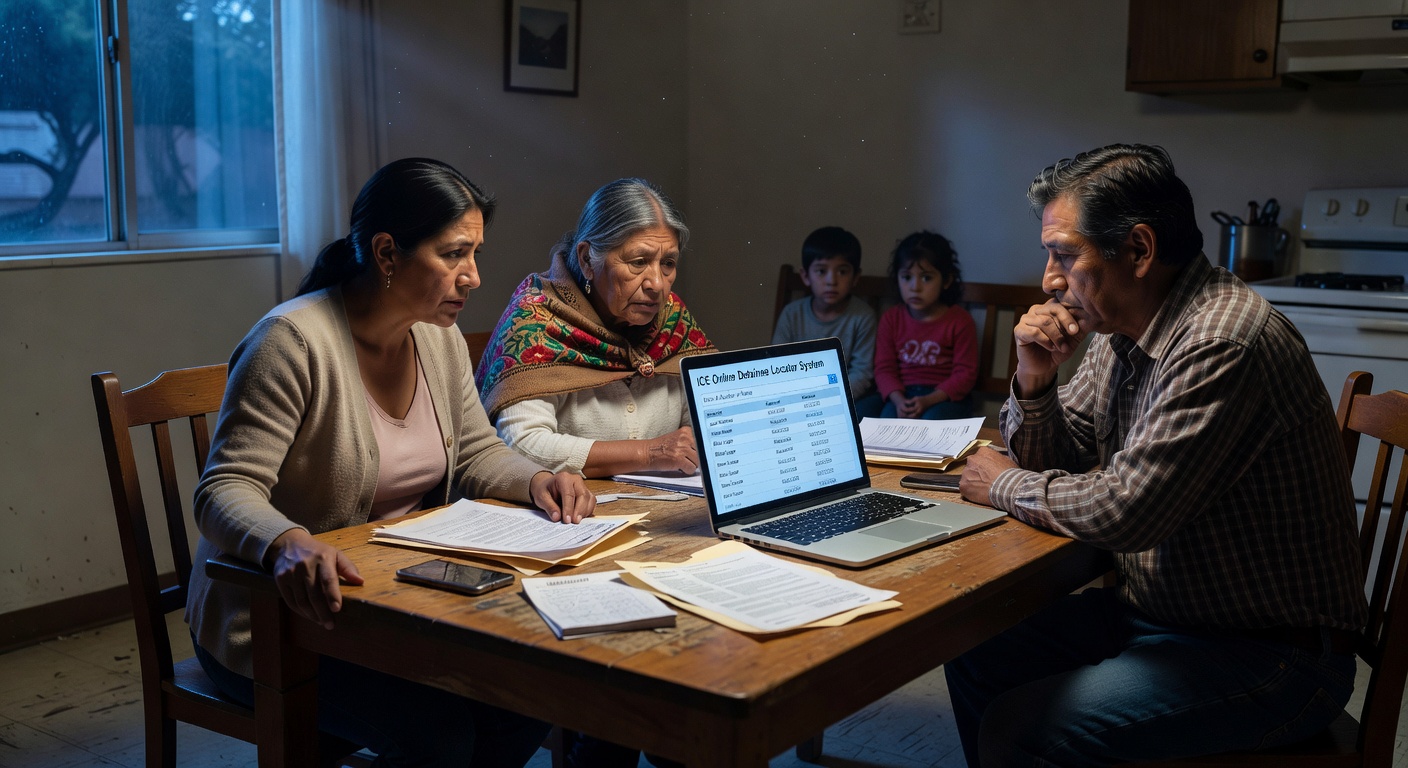
The pattern repeats itself in our office almost every week. A family calls because their son, husband, mother, or brother was picked up by ICE three days ago and held at a local jail under a 287(g) or contract arrangement. They drove down with a change of clothes, deposited money on the commissary account, found a local attorney, and started gathering papers for a bond motion. Then this morning the jail told them the detainee is "no longer in custody here." Calls to ICE's local field office go to voicemail. The Online Detainee Locator either does not show the person at all or shows them at a facility 1,400 miles away — Louisiana, Mississippi, Texas, or Arizona — and the family has no idea how they got there, why they got there, or what to do next.
An ICE interstate transfer is not a technicality. It can quietly move the case into a different federal circuit, with different bond and detention case law, fewer pro bono resources, a different immigration judge culture, and a habeas custodian who sits hundreds of miles from where the original attorney practices. Done suddenly and without notice, it can also break attorney-client communication at precisely the moment when the client needs it most.
This article is the playbook we walk families through when a transfer happens. It is not legal advice for any individual case, but it covers what most families need to know in the first 72 hours: how to find the detainee, how to protect the bond posture, what a Motion to Change Venue can and cannot do, when a habeas petition under 28 U.S.C. § 2241 is the right tool, and how to keep the case from being lost simply because of distance.
Why ICE transfers happen — and why they happen so suddenly
ICE's Enforcement and Removal Operations (ERO) division operates a national detention system that is essentially a logistics network. On any given day, ICE holds roughly 35,000 to 50,000 people in a mix of dedicated detention centers run by private contractors (GEO Group and CoreCivic), county jails that hold ICE detainees under intergovernmental service agreements, and Bureau of Prisons facilities. Beds open and close. Contracts expire. Medical units fill up. Court calendars in one detention immigration court back up while another has open slots. And ICE moves detainees between facilities to manage all of those pressures.
The most common operational reasons we see for an interstate transfer are:
- Bed-space management. Local jails sometimes terminate or limit their ICE agreement under political pressure or because they need beds for their own population. The detainees in those beds have to go somewhere, and ICE generally moves them to the nearest dedicated facility with capacity — which can be hours away.
- Classification. ICE classifies detainees by risk and medical status. A re-classification — for instance, a fight in the dorm, a new psychiatric diagnosis, or a determination that the original facility is not equipped to provide a particular medication — can trigger movement to a "more appropriate" facility, which often means a long-distance transfer.
- Pre-removal staging. When a removal order is final and travel documents are in hand, ICE consolidates detainees at staging facilities near hubs from which it operates ICE Air Operations flights. Stewart Detention Center in Lumpkin, Georgia, and the South Texas ICE Processing Center in Pearsall, Texas, are two well-known examples. A transfer to a staging facility can be a sign that removal is imminent.
- Discipline. A reported disciplinary infraction, sometimes for conduct that the detainee disputes, can trigger movement to a higher-security facility. Detainees who organize hunger strikes, who complain publicly about conditions, or who file grievances have reported being moved suddenly, and several lawsuits have alleged that some of those movements are retaliatory.
- Contract changes. When a facility's contract with ICE ends or is renegotiated, the entire detained population can be moved in a matter of days, sometimes hours. The 2021 closure of the Etowah County Jail's ICE contract in Alabama and the partial wind-down of certain California facilities in 2024–2025 produced exactly that pattern.
Almost none of these transfers come with advance notice to the family or the attorney. The detainee is sometimes given a few minutes to gather property and is then moved. The first notice the family gets is often a missed phone call from an unfamiliar area code or an absence on the Online Detainee Locator.
Quick context
Federal regulations allow ICE broad discretion to move detainees between facilities. 8 C.F.R. § 1003.20 governs venue in immigration court, but it does not control where ICE houses people. The practical result is that the agency makes operational decisions and counsel responds — usually within tight deadlines.
The first hour: finding your loved one
The single most important task in the first hour after you realize a transfer has happened is to locate the detainee with certainty. Decisions about counsel, bond, motions, and even phone deposits all rest on knowing where the person actually is.
ICE Online Detainee Locator System
ICE operates a public locator at locator.ice.gov. It searches by two methods:
- A-Number plus country of birth. This is the most reliable search. The A-Number ("Alien Registration Number") is a unique 8- or 9-digit number assigned to every person who has been processed by ICE or USCIS. It appears on the I-862 Notice to Appear, on any prior USCIS receipt notice, on a green card, on EAD cards, and on any prior ICE detention paperwork.
- Name, country of birth, and date of birth. This works if the name in the system is spelled exactly as ICE recorded it. Names with diacritics, suffixes (Jr., III), or multiple surnames are often entered inconsistently. Try a few spellings before concluding the person is not in the system.
The locator has a real and frustrating limitation: it can take 24 to 72 hours after a transfer to update. A detainee who is on a transfer bus or plane right now may show as still at the originating facility, or may not show anywhere at all. That gap is not a sign that anything mysterious is happening; it is just a delay in data entry. Use the locator, but do not rely only on it.
The originating jail or facility
Call the jail where the detainee was last held. Ask whether the person is "still in custody at this facility" and, if not, "to what facility were they transferred and on what date." Jails will often answer this question for an immediate family member where they will not answer it for anyone else. If the jail will not tell you, ask whether the ICE liaison or ERO officer assigned to that facility is available, and if so, request a name and number.
ERO field office
ICE's ERO is divided into 24 field offices, each covering a defined geographic area. Each field office has a public phone line and a Deportation Officer assigned to each detainee. The Deportation Officer is the person inside ICE who actually controls the case file. You can find the field office covering the originating facility on ICE.gov. When you call, identify the detainee by full name, date of birth, and A-Number, and ask for current location and for the name of the assigned Deportation Officer.
Consulate
The consulate of the detainee's country of citizenship is sometimes the fastest source of information. Under Article 36 of the Vienna Convention on Consular Relations, the U.S. is required to inform foreign nationals of the right to contact their consulate after an arrest, and consulates often log each contact and each transfer. Mexico, El Salvador, Guatemala, Honduras, India, China, and a number of other countries operate active detention-monitoring programs and may know exactly where the detainee was sent. The consulate can also sometimes deliver a message to the detainee faster than the family can.
Attorney with ECN/EOIR access
An immigration attorney already on the case can pull the EOIR online portal record by A-Number and see whether a Notice to Appear has been filed and at which immigration court. The court of filing is a strong indicator of where ICE has placed the detainee, because ICE generally files at the court that serves the housing facility.
If you cannot find them after 72 hours
If the Online Detainee Locator still shows nothing 72 hours after the transfer and the ERO field office cannot tell you where the detainee is, that is no longer an ordinary data lag. Escalate immediately — to the consulate, to a congressional caseworker, and to an immigration attorney who can issue a written demand and, if necessary, prepare an emergency habeas petition. People do not legitimately "disappear" inside ICE custody, and a missing-person posture is the right footing.
What the transfer changes legally — and what it does not
Once you have located the detainee, the next step is to understand what the transfer changed. Some things move with the case; some do not.
What does not change
- The A-Number. It is the lifelong identifier. Every motion, hearing notice, and ICE form will reference it.
- The federal law that governs the case. Immigration is federal. The Immigration and Nationality Act, the Code of Federal Regulations, and the Board of Immigration Appeals' decisions still apply. The substantive eligibility for relief — cancellation of removal, asylum, withholding, adjustment of status, U or T visa, citizenship — does not change because a person moved between states.
- The attorney-client relationship. Immigration counsel are licensed in any U.S. state and admitted to practice before the Executive Office for Immigration Review (EOIR). An attorney based in California can represent a client now held in Louisiana. The G-28 (Notice of Entry of Appearance) follows the client.
- The detainee's underlying immigration status. Lawful permanent residence, parole, asylum-pending status, TPS — none of those are affected by a transfer. ICE moves the person; ICE does not change immigration status by moving them.
What does change
- The immigration court hearing the case. ICE typically refiles or transfers the Notice to Appear to the immigration court serving the new facility. The judge changes. The local bond and removal-relief practice changes. Detained-docket courts in the Fifth Circuit (Louisiana, Mississippi, Texas) operate in a notably different case-law environment than those in the Ninth Circuit (California, Arizona, Nevada).
- The federal district where habeas can be filed. Under Rumsfeld v. Padilla, 542 U.S. 426 (2004), a habeas petition challenging physical custody must generally be filed against the immediate custodian — the warden of the facility — in the federal district where the detainee is held. A transfer changes that district, and with it the federal judges who will hear the case.
- Physical access for visits and meetings. A family that could drive 90 minutes to the originating jail may now need to fly to reach the detainee. Attorney visits often have to convert to video or phone, and some facilities limit the duration of those calls.
- Phone deposits, commissary, and mail. Money on a commissary account at the originating jail does not automatically transfer. Some operators (Securus, GTL) carry balances between facilities they operate; many do not. The family may need to open a new account at the new facility.
- Bond posture, sometimes. A pending bond motion can be transferred with the case, but practical scheduling delays of several weeks are common. A bond that was granted but not yet posted at the originating court may need to be re-noticed at the new court, with all of the administrative friction that involves.
Venue: the Motion to Change Venue under 8 C.F.R. § 1003.20
One of the most important defensive tools after an interstate transfer is the Motion to Change Venue. Under 8 C.F.R. § 1003.20, an immigration judge may change venue for good cause, after a written motion that lays out the reasons. Practitioners typically include:
- The detainee's family and community ties to the original location (length of residence, U.S. citizen family members, employment, place of worship, schools attended by U.S. citizen children).
- The location of essential witnesses and evidence — for example, expert witnesses for an asylum claim, country-conditions evidence, employers willing to testify, mental-health providers familiar with the case.
- The attorney-client relationship and the practical impossibility of conducting an effective defense from the new venue, including the cost and feasibility of in-person meetings.
- Whether ICE has explained the transfer in operational terms or appears to have moved the detainee strategically.
- Concrete prejudice the detainee will suffer if the case stays at the new venue.
The Motion to Change Venue is decided by the immigration judge in the new venue, and the standard is "good cause" — a discretionary call. Not every motion is granted. In our experience, motions are most likely to succeed when (1) the connection between the original venue and the case is strong and well-documented, (2) the case is at an early procedural stage (a pre-pleading motion is much more likely to be granted than a motion filed two weeks before a merits hearing), and (3) counsel has consulted with the trial attorney for ICE about non-opposition. ICE counsel will sometimes agree to a change of venue, particularly when the new court's calendar is heavily impacted.
Even where a Motion to Change Venue is denied, the motion creates a record. That record can support an appeal, a habeas filing, or a later argument that the detainee's due-process rights were impaired by the transfer.
Habeas corpus under 28 U.S.C. § 2241: when and why
A federal habeas corpus petition under 28 U.S.C. § 2241 is the legal vehicle for challenging the fact or conditions of detention itself. It is distinct from anything happening in immigration court. The court in a habeas case is a U.S. District Court — an Article III federal court — and the named respondent is typically the warden of the facility where the detainee is held, with ICE and the Attorney General sometimes named as additional respondents.
The "immediate custodian" rule and why transfers matter
In Rumsfeld v. Padilla, 542 U.S. 426 (2004), the Supreme Court held that the proper respondent in a "core" habeas petition challenging physical custody is the immediate custodian — the person with day-to-day control over the detainee — and the proper venue is the district where that custodian resides. The Court treated this as the default rule for habeas. (The earlier decision Padilla v. Hanft arose from the same litigation in the Fourth Circuit and is the merits side of the same line of cases.)
For immigration detention, the consequence is that a habeas filed against the warden of a Louisiana detention center must usually be filed in the U.S. District Court for the relevant Louisiana district, not in California where the family lives, not in the district of the deportation officer, and not in the District of Columbia. A transfer can therefore physically move the right place to litigate habeas from one circuit to another — sometimes from a circuit with favorable detention case law to a circuit with much less favorable law, or vice versa.
Several federal courts have addressed the situation where ICE transfers a detainee after a habeas is already filed. The trend, though not uniform, is that a properly filed petition does not become moot solely because of a later transfer; the original court retains jurisdiction if it had jurisdiction at filing. That is one of the reasons counsel sometimes file habeas quickly, even before all the underlying facts are fully developed — to lock in jurisdiction.
When habeas is the right tool
Habeas is most useful in immigration detention in three recurring situations:
- Prolonged detention without a bond hearing. Under Zadvydas v. Davis, 533 U.S. 678 (2001), post-removal-order detention beyond six months without a meaningful prospect of removal raises due-process problems. Various circuits have also recognized due-process rights to bond hearings in prolonged pre-removal detention, though the case law has shifted substantially since Jennings v. Rodriguez, 583 U.S. 281 (2018).
- Conditions-of-confinement claims. Habeas can sometimes reach serious conditions claims, including medical neglect, denial of access to counsel, and (in some circuits) protective claims for vulnerable detainees. Conditions claims often live more comfortably as Bivens or APA actions, but habeas remains a path in some circuits.
- Retaliatory or pretextual transfers. Where the transfer itself appears to be retaliation for protected activity — filing a grievance, organizing, talking to a journalist, or exercising the right to counsel — habeas can challenge the transfer as an unconstitutional restriction on liberty.
None of these is a free pass. Habeas is a serious filing; it requires careful pleading, exhaustion analysis, and a clear theory of why the federal court has jurisdiction. But where it fits, it is one of the strongest tools available, particularly because it forces a response from the federal government in days, not months.
Bond strategy after a transfer
Bond after a transfer needs a clear plan. The detained-docket bond hearing is governed by 8 U.S.C. § 1226 and by the decisions of the Board of Immigration Appeals, most importantly Matter of Guerra, 24 I&N Dec. 37 (BIA 2006), which sets out the factors immigration judges weigh:
- Fixed address in the United States;
- Length of residence;
- Family ties and the immigration status of family members;
- Employment history;
- Record of appearance in court;
- Criminal history and any open cases;
- Membership in community organizations; and
- Manner of entry and length of time present.
After an interstate transfer, the bond motion needs to be filed in the immigration court that now has jurisdiction. The substance does not change much, but several practical points do:
- Evidence gathering takes longer. Witness letters from a community 1,500 miles away can take days to arrive. Use email-attached letters with original signatures by overnight courier; many judges accept scanned originals.
- The detained-docket calendar at the new court may be slower. Detained-docket bond hearings should be scheduled within a few weeks, but in heavily impacted dockets the wait can stretch.
- Existing bond rulings at the originating court do not automatically carry. If the original judge had already denied bond, that finding is part of the file. If the original judge had granted bond and the family had not yet posted, the receiving judge may or may not honor the prior grant; this should be raised in writing.
- Consider the parallel Motion to Change Venue. Filing a bond motion at the new court does not waive the right to seek venue back to the original location. Both motions can be pursued, with the bond motion typically resolved first.
A realistic case vignette
The following is a composite of cases we have handled, with all identifying details changed. It is not a guarantee of outcome in any case.
M.A. is a 38-year-old lawful permanent resident from Honduras. He has lived in San Diego for 19 years, has a U.S. citizen spouse and three U.S. citizen children, and works as a refrigeration mechanic. In April 2026, after returning from a short trip to see his ailing father, he was stopped at the San Ysidro port of entry, paroled in for further inspection, and then arrested by ICE based on a 2014 misdemeanor that ICE believed triggered removability under INA § 237(a)(2)(A)(ii). He was held at Otay Mesa Detention Center. His family hired counsel within 48 hours; a bond motion was prepared and scheduled for hearing the following week.
Three days before the bond hearing, ICE transferred M.A. to a facility in central Louisiana. The family learned of the transfer when the detention center told them M.A. was "no longer here." The Online Detainee Locator did not update for 36 hours. The Honduran consulate in Houston located him first.
Counsel filed three motions in quick succession: (1) a Motion to Change Venue under 8 C.F.R. § 1003.20 in the Louisiana immigration court, citing 19 years of residence, four U.S. citizen immediate family members, employment, and the cost and infeasibility of meaningful legal defense from California; (2) a bond motion in the same court while the venue motion was pending; and (3) a habeas petition under 28 U.S.C. § 2241 in the U.S. District Court for the Western District of Louisiana, where the facility is located, focused on the prolonged-detention question.
The Motion to Change Venue was granted four weeks later. The case returned to the San Diego immigration court, where the bond motion was decided on briefs and a hearing was set within ten days of arrival. M.A. was released on bond; the habeas petition was withdrawn as moot. The merits case — whether the 2014 misdemeanor actually triggered the alleged ground of removability — continued at the non-detained docket. The transfer cost the family roughly six weeks of additional detention time and substantial legal fees. It would have cost much more without a coordinated motion strategy.
Two points are worth noting. First, no single motion solved the problem; the combination did. Second, the family's role — providing affidavits, witness letters, school records for the children, employment letters, and a complete chronology of M.A.'s life in San Diego — was decisive. Detained-docket cases run on documentation that only the family can gather.
Communication: keeping the case moving across distance
The hardest part of an interstate transfer for many families is the communication gap. The detainee cannot freely use a phone, has limited mail privileges, and has very limited time during attorney calls. A small number of disciplined practices keep the case from drifting.
Set up a single point of contact in the family
One person should be designated as the contact for the attorney, ICE, and the facility. That person keeps a written log of every call, every voicemail, every receipt, every deposit. ICE and facility staff cycle frequently; the person on duty next week may have no idea what was discussed last week. The log is the only consistent memory.
Open a deposit account at the new facility immediately
Phone calls, video visits, and commissary all require money at the receiving facility. Most facilities use Securus, GTL, ViaPath, or a similar operator. The detainee can place free calls in many systems, but call quality and frequency improve with a funded account. Confirm with the facility which operator is used and follow that operator's instructions exactly.
Set up scheduled call windows with the attorney
Many facilities require attorney calls to be pre-scheduled and to come from a verified attorney phone number. Attorney calls are usually unmonitored under PBNDS standards (the Performance-Based National Detention Standards, last revised in 2016, with parallel rules in the 2019 National Detention Standards), but the detainee should still treat communication conservatively.
Use written mail strategically
Letters between attorney and client marked "Legal Mail" must be opened only in the detainee's presence under PBNDS standards. Family mail is not legal mail and is generally read by facility staff. Avoid putting case-strategy information in family letters; route those communications through counsel.
Keep evidence flowing to counsel
The family is usually the only practical source of documents the detainee needs: birth certificates, marriage certificates, tax returns, school records, medical records, employer letters, country-conditions evidence. Build a shared cloud folder accessible to counsel. Scan everything. Originals can wait.
The PBNDS rule on transfers — and how to use it
ICE's own detention standards address transfers directly. Section 7.4 of the 2011 Performance-Based National Detention Standards (PBNDS 2011), revised in 2016, sets out the agency's transfer protocol. Key features:
- Transfers should be coordinated with the receiving facility to avoid unnecessary movement.
- Detainees should be allowed to take their property, including legal materials, with them, or to have it shipped to the new facility within a reasonable time.
- Detainees should be permitted to notify family and counsel "as soon as practicable" after arrival.
- Transferred detainees with pending immigration court matters should be tracked so that hearings are not missed.
- Medical records should accompany the detainee, with continuity of care arranged.
The PBNDS is not a statute and is not directly enforceable in court the way a regulation is. But documented violations can support motions, complaints to ICE's Office of Detention Oversight (ODO), and complaints to the DHS Office for Civil Rights and Civil Liberties (CRCL). A pattern of violations, well-documented, also gives counsel a record to use if the case reaches federal court on habeas.
When the transfer signals removal is imminent
Some transfers — particularly to staging facilities like Stewart in Lumpkin, Georgia; Adams County Detention Center in Mississippi; La Palma in Eloy, Arizona; or the South Texas ICE Processing Center in Pearsall — can be a sign that ICE is preparing to remove the detainee. The signs to watch for include:
- A final order of removal already in place, or an order that has become final because no appeal was timely filed;
- Travel documents (a passport, a Mexican matrícula, an emergency travel document from the consulate) recently issued or surrendered;
- A medical clearance check shortly before transfer;
- Movement onto an ICE Air Operations manifest, sometimes detectable through advocacy networks that track flights;
- The detainee being told to gather all property "for transfer," not "for housing change."
If those signs appear, time pressure becomes acute. A motion to reopen with the BIA or the immigration court, a request for a stay of removal under 8 C.F.R. § 1003.6 or before a federal court, and, in narrow cases, a Convention Against Torture claim can all be deployed — but they need to be filed before the plane leaves, not after. Families who suspect removal is imminent should not wait to confirm; they should call counsel that day.
What Modern Law Group does for transferred clients
Our firm has handled detained cases across every major ICE region — California, Texas, Louisiana, Georgia, Arizona, New York, Florida, Illinois, Pennsylvania, and elsewhere. After a transfer, we typically do the following in parallel:
- Locate. Confirm the facility, the deportation officer, and the immigration court of jurisdiction within hours.
- Communicate. Establish attorney access at the new facility, open a phone account when needed, and set up legal-mail and video-visit logistics.
- Move venue, where appropriate. Prepare and file a Motion to Change Venue under 8 C.F.R. § 1003.20 with the documentation that supports good cause.
- Bond. File or refile a bond motion at the new immigration court, including evidence of community ties, family, employment, and the absence of flight risk or danger.
- Habeas. Where prolonged detention, retaliatory transfer, or a defective bond process supports it, file a habeas petition under 28 U.S.C. § 2241 in the federal district where the detainee is held.
- Merits relief. Continue the affirmative or defensive merits case — cancellation of removal, asylum, withholding, adjustment, T or U visa, naturalization — at whichever court ultimately retains jurisdiction.
- Document PBNDS issues. Where the transfer violated detention-standards protocols (no notice, no property, no medical continuity, no phone access), document those issues for use in motions and complaints.
None of this is a guarantee of release or of a particular outcome. It is what serious detained-docket immigration defense looks like after the case suddenly relocates 1,500 miles.
A word about urgency, and about doing nothing
The single most expensive mistake we see families make after a transfer is waiting — waiting for the locator to update, waiting for the detainee to call back, waiting for ICE to explain itself, waiting until "we know more." Detained-docket time runs faster than non-detained time. Bond motions are decided in days, not months. Removal orders, once final, can be executed within weeks. The right time to call counsel is the day the transfer is discovered, not after the locator confirms it.
Equally important: do not assume that a transfer is a death blow to the case. Most of the cases we handle after interstate transfers end up either back at the original immigration court, resolved on bond, or moved into a successful merits posture. The transfer is a logistical problem; it is usually not a legal sentence. With a coordinated motion strategy, careful communication, and reliable family documentation, the case can be put back on track.
Related reading
- What Families Should Do When a Loved One Is Detained by ICE
- ICE Detainer vs. Warrant: What's the Difference and Why It Matters
- Habeas Corpus in Immigration Detention: When Federal Court Is the Answer
- The Immigration Bond Hearing Process: What to Expect Step by Step
A family member transferred by ICE to another state? Contact our immigration attorneys at Modern Law Group.
Frequently asked questions about ICE interstate transfers
Can ICE move a detainee to another state without warning the family?
Yes. ICE has broad authority to move detainees within its national detention system, and families often receive no advance notice. That does not mean the transfer was harmless. A sudden transfer can affect attorney access, bond timing, immigration-court venue, and the federal district where habeas relief may be filed.
Does the immigration case automatically move with the detainee?
Not always cleanly. ICE may file or transfer the Notice to Appear to the detained court serving the new facility, but hearing notices, attorney entries, and bond motions can lag behind. Families should confirm both the physical facility and the EOIR court location instead of assuming they are the same.
Can the family ask to move the case back?
Usually the procedural tool is a Motion to Change Venue under 8 C.F.R. § 1003.20. The motion needs more than inconvenience. Stronger facts include retained counsel near the original court, key witnesses or records in the original location, family hardship, medical issues, and evidence that the transfer interfered with representation.
Does an out-of-state transfer hurt bond chances?
It can. Bond hearings are heavily fact-driven, and a transfer may place the case before a different judge, court culture, and federal circuit. The solution is not to restart from zero. Counsel should preserve the existing bond evidence, supplement it with local sponsor and release-plan documents, and refile quickly if the venue changes.
When does habeas matter after a transfer?
Habeas under 28 U.S.C. § 2241 may matter when detention is prolonged, when the bond process is legally defective, when ICE appears to be using transfer to frustrate access to counsel, or when removal is imminent despite unresolved legal issues. Because the immediate custodian rule can tie habeas to the district of detention, location matters.
What should families do first?
Find the person, preserve every notice and call log, keep records of failed contact attempts, confirm the new court, and talk to an immigration attorney before filing anything. The biggest mistake is waiting for perfect information while bond, venue, appeal, or stay deadlines keep running.
Was Your Loved One Just Transferred? Don't Wait.
Interstate transfers compress every deadline that matters. Talk to an experienced immigration attorney today about bond, venue, and habeas options.
Schedule a Consultation