





Quick answer
On June 15, 2026, the Supreme Court agreed to decide whether immigrants with criminal records who are held in prolonged ICE detention have a constitutional right to a bond hearing under 8 U.S.C. § 1226(c). The Court has not ruled yet — argument is expected this fall, with a decision likely by mid-2027. Until then, whether a detained person can ask a judge for release depends on which federal circuit they are in. If you or a family member is detained, this is the time to file for a bond hearing, not after the ruling.
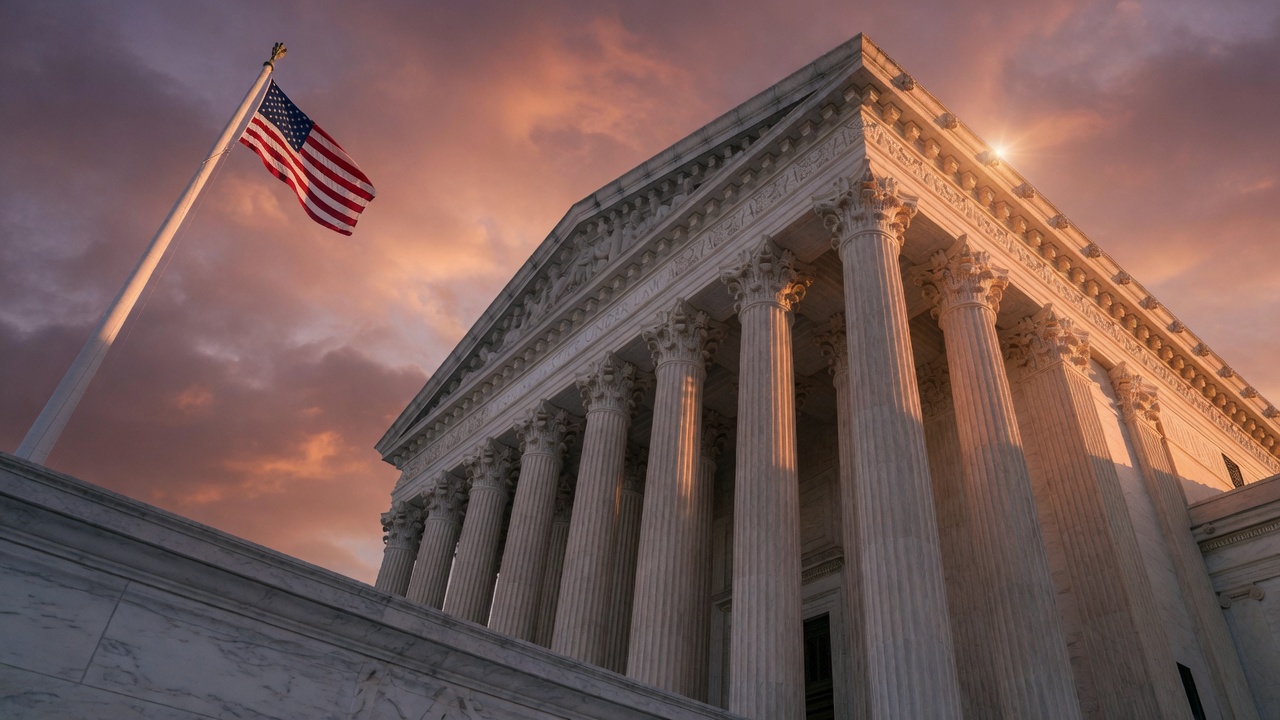
For thousands of detained immigrants and their families, one question controls everything: can the government hold a person in custody for months or years while a deportation case grinds forward, with no hearing where a judge weighs whether they are actually a danger or a flight risk? On June 15, 2026, the Supreme Court agreed to answer it.
The case reaches the Court as a Trump administration appeal. The administration wants the justices to rule that immigrants with qualifying criminal convictions have no constitutional right to a bond hearing, no matter how long they are detained. A ruling in the government's favor would remove one of the last checks on indefinite detention during removal proceedings.
This article explains what the Court agreed to decide, the law behind it, and — most important — what a detained person or their family should do right now, before the decision comes down.
Critical point
The Supreme Court taking the case does not change the law today. In several circuits, prolonged mandatory detention still triggers a right to a bond hearing. Waiting for the ruling can mean months of extra detention that a habeas petition might have ended. Act on current law now.
What the Supreme Court agreed to decide
The Court granted review of a 2024 decision from the U.S. Court of Appeals for the Second Circuit involving two long-term lawful permanent residents detained under the mandatory-detention statute:
- Carol Williams Black — a Jamaican national who entered the United States in 1983 and became a green-card holder. ICE detained him in 2019 based on a criminal conviction and sought to hold him without a bond hearing. He was detained roughly seven months.
- Keisy G.M. — a Dominican national who entered in 2011, obtained permanent residency, and lived in New York. ICE arrested him in 2020 after a 2015 assault plea. He was detained roughly 21 months.
Both men filed habeas corpus petitions arguing that being held that long without any individualized bond hearing violated their due process rights. A Second Circuit panel agreed in 2024, holding that "the constitutional guarantee of due process precludes a noncitizen's unreasonably prolonged detention under 8 U.S.C. § 1226(c) without a bond hearing."
The administration asked the Supreme Court to review two things: whether due process requires a bond hearing for § 1226(c) detainees at all, and whether there is any point at which mandatory detention becomes "unreasonably prolonged." The Court agreed to hear it. Argument is expected in the fall 2026 term, with a ruling most likely by the end of the term in mid-2027.
The law: how immigrants end up detained without a bond hearing
The statute at the center of the case is 8 U.S.C. § 1226(c) — the mandatory-detention provision. It directs the government to detain certain noncitizens with qualifying criminal convictions during their removal proceedings. Unlike ordinary immigration detention under § 1226(a), where an immigration judge can set bond, § 1226(c) on its face provides no bond hearing at all.
Three Supreme Court cases frame the fight:
- Zadvydas v. Davis (2001). The Court read an implicit time limit into post-removal-order detention under § 1231(a)(6), treating roughly six months as a presumptively reasonable period when there is no significant likelihood of removal in the reasonably foreseeable future. Detention cannot be truly indefinite.
- Demore v. Kim (2003). The Court upheld mandatory detention under § 1226(c) against a facial constitutional challenge, reasoning that detention during removal proceedings serves legitimate purposes — preventing flight and protecting the public.
- Jennings v. Rodriguez (2018). The Court held that § 1226(c) does not, by its text, require periodic bond hearings every six months. But it sent the constitutional due process question back to the lower courts — it did not decide whether the Constitution itself requires a hearing once detention drags on.
That unanswered constitutional question is exactly what the Court will now take up. The Second Circuit, like several others, filled the gap by holding that due process requires a bond hearing after detention becomes unreasonably prolonged. The administration wants that rule erased.
What we see in our practice
We represent people who have sat in detention for six months, a year, longer — while a green-card holder's removal case is litigated. Families lose income, children lose a parent at home, and the person inside has no hearing where a judge can ask the basic question: is this individual actually dangerous, or a flight risk, today?
In many of those cases, the path to a hearing is not the immigration court at all. It is a habeas corpus petition filed in federal district court, arguing that prolonged mandatory detention without a bond hearing violates due process. In circuits that recognize that right, those petitions can and do lead to release. The Supreme Court case is about whether that door stays open.
Why this matters for detained clients right now
The most dangerous misreading of this news is "the Supreme Court is deciding, so we should wait." The opposite is true.
- The current law in your circuit still controls. If you are detained in a circuit that recognizes a right to a bond hearing after prolonged detention, that right exists today. The Supreme Court has not overruled it.
- A habeas petition can be filed now. A federal habeas petition challenging unreasonably prolonged detention does not have to wait for the ruling. Each month of detention can strengthen the argument.
- A favorable ruling for the government would be prospective fuel, not instant. Even if the Court later sides with the administration, pursuing release under today's law is the right move while that law still stands.
Related reading
For more depth, see Challenging Prolonged Immigration Detention, Habeas Corpus in Immigration Detention, How Long Can ICE Detain You Without Bond?, and Criminal Record and Immigration Bond.
What a bond hearing actually decides
A bond hearing is not the deportation case. It does not decide whether a person wins the right to stay. It decides one narrower thing: whether the person can be released from detention — usually on a money bond and conditions — while the removal case continues.
At a constitutionally required prolonged-detention hearing, the key issues are usually whether the person is a danger to the community or a flight risk, and in many circuits the government carries the burden of justifying continued detention by a heightened standard. Strip that hearing away, and a person with a years-old conviction who has served their criminal sentence can still sit in ICE custody indefinitely with no judge ever weighing those questions.
Scenarios this case directly affects
- Long-term green-card holder with an old conviction. Like the petitioners in this case, lawful permanent residents detained under § 1226(c) are squarely affected.
- Someone detained for many months with a slow-moving case. The longer the detention, the stronger the prolonged-detention argument under current law.
- A detainee whose removal is not realistically imminent. Zadvydas principles cut hardest where actual removal is uncertain or far off.
- Families weighing whether to act now or wait. The ruling is a year or more away; current law is available today.
If you or a family member is detained: a checklist
- Find out the legal basis for detention. Is the person held under § 1226(c) mandatory detention, § 1226(a) discretionary detention, or post-order § 1231 detention? The answer changes the strategy.
- Track the length of detention. Note the exact date ICE took custody. Time in detention is central to a prolonged-detention argument.
- Identify the federal circuit. Bond-hearing rights for prolonged detention vary by circuit. Where the person is detained matters.
- Get the criminal record reviewed. Whether a conviction triggers mandatory detention is a legal question, and sometimes the categorization is wrong.
- Ask about a habeas corpus petition now. Do not wait for the Supreme Court. A federal habeas petition is the usual vehicle to demand a bond hearing under current law.
- Preserve every argument. Even if a ruling later narrows these rights, raising them now protects the case as the law stands today.
- Talk to an immigration attorney immediately. Detention cases move on their own clock, and the right filing at the right time can mean release months sooner.
Frequently Asked Questions
Did the Supreme Court already rule that immigrants with criminal records can be detained indefinitely?
No. On June 15, 2026 the Supreme Court agreed to hear the case. It has not decided it. Argument is expected in the fall 2026 term, with a ruling likely by mid-2027. Until the Court rules, the bond-hearing law that applies depends on which federal circuit your detention is in.
What law lets ICE detain someone with a criminal record without a bond hearing?
8 U.S.C. section 1226(c), the mandatory-detention statute, requires detention of certain noncitizens with qualifying criminal convictions during removal proceedings. The Supreme Court upheld mandatory detention in Demore v. Kim in 2003 and held in Jennings v. Rodriguez in 2018 that section 1226(c) does not by itself require periodic bond hearings. The open question is whether the Constitution requires a bond hearing once detention becomes unreasonably prolonged.
If I am detained right now, can I still ask for a bond hearing while the Supreme Court case is pending?
Possibly. In several federal circuits, including the Second Circuit, courts have held that due process requires a bond hearing after prolonged mandatory detention. A habeas corpus petition filed in federal district court is the usual way to request that hearing. Whether it is available depends on your circuit, the length of detention, and the facts of your case, so talk to an attorney now rather than waiting for the Supreme Court.
How long is considered unreasonably prolonged detention?
There is no single nationwide number. In Zadvydas v. Davis the Court treated six months as a presumptively reasonable period for post-removal-order detention. For mandatory detention during proceedings, some courts have found detention unreasonable after roughly six months to a year, but the analysis is case-specific and turns on the length of detention, the cause of delay, and the likelihood of removal.
What happens to detained immigrants if the Supreme Court sides with the government?
If the Court holds there is no constitutional right to a bond hearing for section 1226(c) detainees, immigrants with qualifying convictions could be held without an individualized bond hearing for the entire length of their removal proceedings, which can last many months or years. That is why preserving every available legal argument now, before the ruling, matters.
Talk to an Attorney If You or a Loved One Is Detained
If someone you love is in ICE detention — especially under mandatory detention with a criminal record — do not wait for the Supreme Court to rule. Call Modern Law Group at (888) 902-9285. We can review the basis for detention, the length of custody, the controlling circuit law, and whether a habeas corpus petition can win a bond hearing under the law as it stands today.
📚 Related Articles
- Challenging Prolonged Immigration Detention
- Habeas Corpus in Immigration Detention
- How Long Can ICE Detain You Without Bond?
- Criminal Record and Immigration Bond
Have a detained loved one? Contact our habeas corpus and detention attorneys at Modern Law Group today.
Is a Loved One Detained Without a Bond Hearing?
Get a case-specific review of whether a habeas petition can win a bond hearing under current law.
Schedule a Consultation