





Quick answer: A police officer’s refusal to help can matter in a U.S. asylum case, but it does not by itself show that your country could not or would not protect you. Explain what protection you needed, what officials knew, how they responded, and what happened afterward. If you never reported the threats, explain why reporting was dangerous or would have made no difference in your circumstances. Do not put yourself or anyone back home in danger to obtain a complaint number.
Separate the threat from the response
Imagine a shopkeeper threatened after organizing a religious gathering. A message telling her to stop meeting may help explain the attackers’ motive. A neighbor who went with her to the police station can speak to something different: what she told the officer, what he said, and whether he took any action. Both pieces can matter, but neither witness should tell the other person’s story as if it were their own.
When the person threatening you is a relative, a gang member, or another private individual, the government’s role is a separate question. A judge may believe you received threats yet find that officials were willing and able to provide protection. You must also address whether the harm amounts to persecution and whether race, religion, nationality, political opinion, or membership in a particular social group was or would be at least one central reason for it. Police inaction alone does not supply that motive.
What one visit to a police station can prove
Start with what you remember, not with the conclusion “the police did nothing.” Did an officer refuse to take your complaint? Record it but decline an investigation? Open a case and then disclose your address to the person threatening you? Those are different responses. If you do not know what happened inside the agency, say what you know: for example, that nobody contacted you before you left, rather than that nobody investigated.
Under Matter of S-S-F-M- (29 I&N Dec. 207), immigration judges apply the restored Matter of A-B- decisions. The inquiry is more demanding than showing that police sometimes fail to solve crimes. One local officer’s refusal is not ordinarily proof about the government as a whole. An attorney can check the controlling federal appeals court decisions where your case is heard and identify what evidence connects your experience to the broader failure of protection.
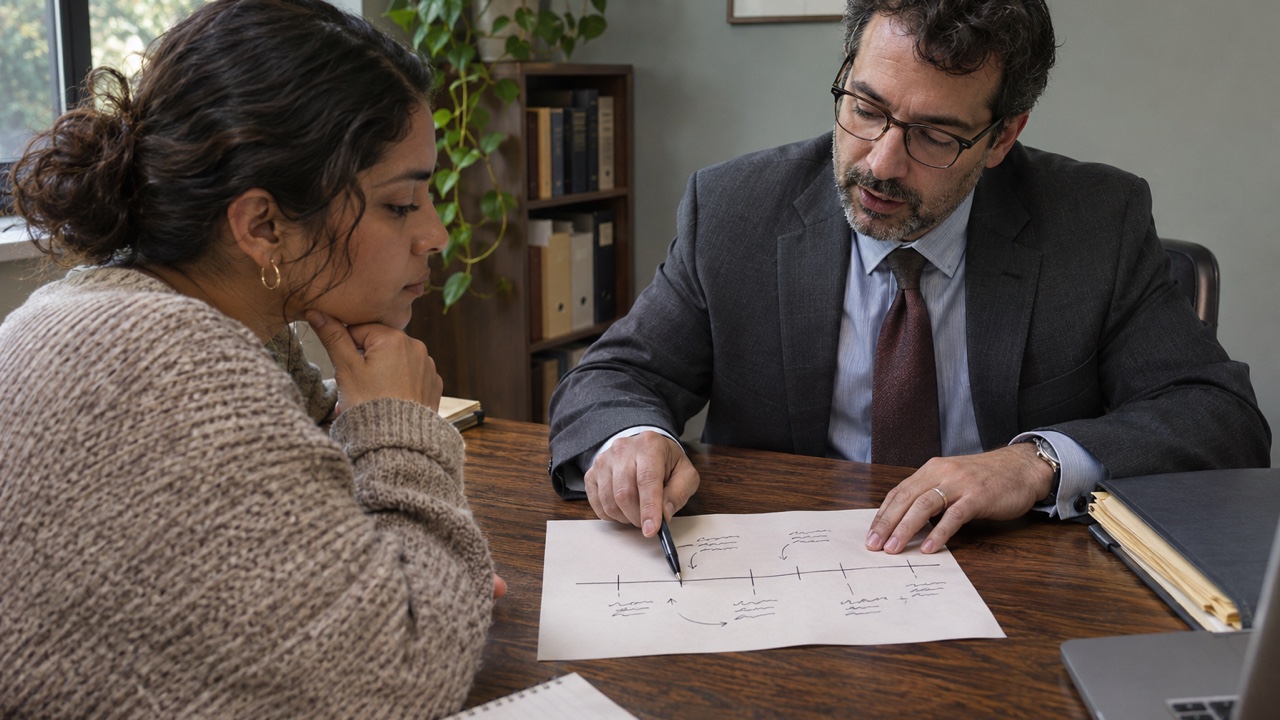
Build a timeline that includes actions taken on your behalf
- Before the report: Note the threats, the approximate dates, how you recognized the source, and what information you had when you sought help.
- At the report: Identify the office, who accompanied you, what you asked for, and what you saw or heard directly. Mark dates as estimates when necessary.
- After the report: Include follow-up calls, referrals, patrols, arrests, periods of safety, renewed threats, or retaliation. Explain how you learned of each development.
Do not leave out a police response because it seems unfavorable. In Matter of V-A-B- (29 I&N Dec. 621), the Board considered an arrest and available services when evaluating protection. If an arrest occurred in your case, explain who was arrested, for what conduct, and what danger remained. A record of an arrest for a different offense does not speak for itself.
If you did not report, explain the choice you actually faced
“I was afraid” can be entirely true and still leave the judge asking why. Did the person threatening you know local officers? How do you know? Did another person report similar conduct and suffer retaliation? Distinguish what you personally observed from what someone told you. If you were a child, explain who controlled your movements and whether any trusted adult could safely intervene. Your options then may look very different from the options an adult has now.
If a hotline, prosecutor, protective order, or shelter existed, explain whether it was accessible to you. Did you know about it? Could you reach it without alerting the person who controlled your transportation or phone? If you moved to another town, describe how long you stayed, who knew where you were, and whether threats continued. Whether you could safely and reasonably relocate within your country is related to, but distinct from, how the police responded.
Choose evidence that answers a specific question
A witness statement is useful when the writer says where they were and what they actually observed. A message you sent immediately after leaving the station can help establish timing. A country report is most helpful when it describes the agency, region, time period, or group involved, rather than just a national crime rate. Preserve original messages and complete conversations if safe; do not edit screenshots or ask someone to provoke a new threat.
Before your hearing, compare your timeline with your asylum application, earlier interview answers, and any records you intend to submit. Tell counsel about discrepancies rather than trying to make accounts match. Ask about filing deadlines, translation requirements, and safe ways to explain why a document is unavailable.
Review the protection issue before your hearing
Our attorneys at Our attorneys at Modern Law Group can review your timeline, identify what the evidence shows about the authorities’ response, and discuss gaps before you testify. Call 888-902-9285 or Schedule a Consultation.
Frequently asked questions
Is a police report required?
Not in every case. If you did not report, evidence that reporting would have been dangerous or futile can matter. Explain why that was true for you, not just why people generally distrust police.
What if the officer never gave me a copy?
Describe the visit and what happened when you asked for a copy, if you did. A witness or contemporaneous message may support the account even without official paperwork.
Does a law against the conduct defeat my case?
Not by itself. The law on paper and the protection available to you in practice can differ. Be prepared to discuss both.
Should I contact the officer now?
Do not expose yourself or relatives to danger to create evidence. Discuss the risks and safer alternatives with counsel before making contact.
What if the police helped at first?
Include that help. Describe its duration, what it accomplished, and the specific facts showing why danger remained or returned.
Can a relative write from abroad?
A relative with firsthand knowledge can explain what they observed. Discuss safe contact and how to submit the statement with your lawyer; do not give the writer a story to repeat.
What should I bring to a consultation?
Bring hearing notices, earlier applications, a dated list of incidents, and any records you already hold safely. Identify evidence that may exist but would be dangerous to request.