




⚖️ What Changed on June 24, 2026 — The Short Version
A federal judge issued a nationwide ruling that fundamentally changes the risk of going to immigration court. If you have a hearing coming up — or missed one out of fear — here is what matters most:
- Judge P. Casey Pitts vacated the 2025 policy that let ICE arrest people simply for showing up to immigration court.
- The ruling reinstates the pre-2025 limits: courthouse arrests allowed only for national security threats, imminent danger, or hot pursuit.
- The court also struck down the rule extending short-term detention from 12 hours to 72 hours.
- The protection is nationwide and applies to a certified class — not just to the people who sued.
- It does NOT protect you on the street, at home, at work, or at an ICE field-office check-in.
- The government has appealed. The protection is real today but could change — which is exactly why you should attend your hearing now and not skip it.
The Courthouse Used to Be Safe Ground
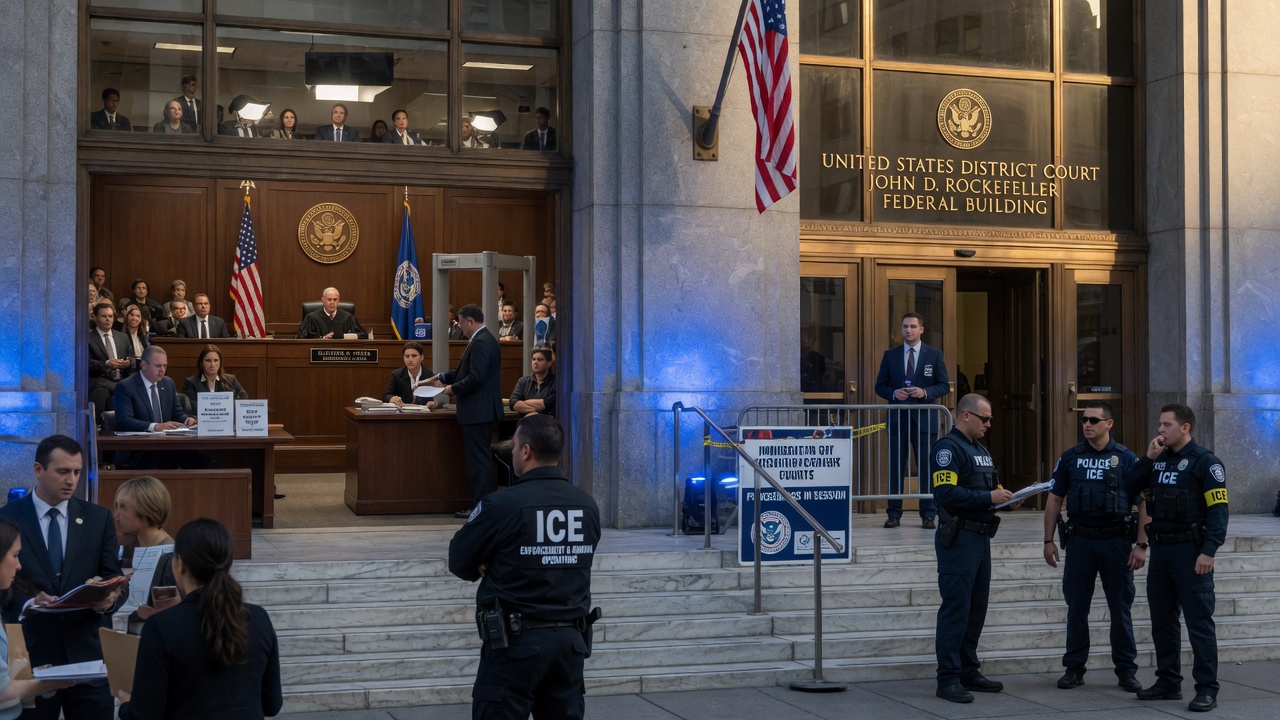
For most of modern immigration enforcement, an immigration courthouse was understood to be a place you could walk into without being walked out in handcuffs. Not because the law granted special immunity inside the building, but because of a settled policy choice: the government recognized that a justice system cannot function if the people it summons are afraid to appear. Witnesses must testify. Respondents must defend themselves. Families must show up to fight for the right to stay. A courthouse where attendance is punished is not a courthouse at all.
That understanding collapsed in 2025. Under a new policy, Immigration and Customs Enforcement began arresting people at and around immigration courts based on nothing more than "credible information" that a noncitizen would be present — which, for people who had received a notice to appear, was simply the fact that they had a hearing. The predictable happened: people stopped coming. Immigration judges reported a dramatic decline in attendance at master calendar hearings. Asylum seekers and longtime residents alike faced an impossible choice between obeying a court summons and avoiding arrest at the very building where they were ordered to appear.
On June 24, 2026, a federal judge ended that policy. P. Casey Pitts, a United States District Judge for the Northern District of California, issued a 71-page ruling that vacated ICE's 2025 courthouse-arrest policy, struck down a parallel policy from the Department of Justice's Executive Office for Immigration Review (EOIR), and — in a part of the decision that has received less attention but matters enormously — vacated the administration's waiver that had extended the limit on short-term detention from 12 hours to as much as 72 hours. The court certified a nationwide class and reinstated the narrow, pre-2025 limits under which courthouse arrests were reserved for genuine emergencies: national security threats, imminent danger, and hot pursuit.
This article explains exactly what that ruling does and does not change, because the difference is the difference between a smart decision and a catastrophic one. The ruling makes attending your own immigration hearing substantially safer. It does not make you immune to enforcement everywhere, and it pointedly does not cover ICE check-ins at ICE offices. If you take one thing from this article, take this: do not skip your hearing. The single most dangerous response to fear of arrest is to fail to appear, because that produces an in-absentia removal order — a self-inflicted wound that the courthouse ruling cannot heal.
History of ICE Courthouse Policy (2014–2025)
To understand why Judge Pitts's ruling matters, you have to understand the policy whiplash that preceded it. The rules governing whether ICE could arrest people at courthouses changed three times in roughly a decade, each shift reflecting a different judgment about the balance between enforcement and access to justice.
2014–2021: Arrests Limited to High-Risk Individuals
Beginning around 2014, ICE operated under guidance that treated courthouse arrests as a tool to be used sparingly and only against high-priority targets. The animating logic was practical and institutional: courts, prosecutors, victim advocates, and judges across the country had warned that aggressive courthouse enforcement would scare people away from the justice system entirely. A domestic-violence victim who fears arrest will not come to court to testify against her abuser. A witness who fears arrest will not cooperate with prosecutors. A tenant who fears arrest will not show up to fight an illegal eviction. The justice system depends on people showing up, and that depends on the courthouse being a place where showing up is safe.
Under this framework, courthouse arrests were generally limited to individuals who posed a genuine public-safety or national-security concern — people with serious criminal histories, prior removals, or specific threat profiles. The ordinary respondent attending a routine hearing was not a target. This was not a guarantee of absolute safety, but it was a meaningful, stable policy that allowed the immigration court system to function.
2021–2025: The Biden-Era Narrowing
In 2021, the incoming administration formalized and tightened those limits. The new guidance restricted civil immigration enforcement actions in and around courthouses to a short list of narrow circumstances: where the action involved a national security threat; where there was an imminent risk of death, violence, or physical harm; where it concerned the hot pursuit of an individual who posed a public-safety threat and who was fleeing; or where there was an imminent risk of destruction of evidence material to a criminal case.
This was the high-water mark of courthouse protection. The default was no arrests; the exceptions were genuine emergencies. For four years, people could attend immigration court, family court, criminal court, and civil proceedings with a reasonable expectation that the act of appearing would not, by itself, lead to their arrest. Practitioners built their practices around that expectation. Clients trusted it. The system functioned.
⚠️ Why the Policy History Matters to Your Case
If you received a removal order or made decisions about attending court during a particular window, the policy in effect at that time can be legally relevant. Someone who failed to appear in 2025 — when courthouse arrests were actively occurring under the Trump policy — is in a different factual position than someone who failed to appear in a year when the courthouse was protected. If you missed a hearing during the 2025 enforcement period out of documented fear, that timing may matter to a motion to reopen. Preserve any evidence of what you experienced or feared, and raise it with an attorney.
May 2025: The Trump Policy Opens the Courthouse Doors to ICE
In May 2025, the administration reversed course dramatically. New policy authorized ICE to conduct civil immigration arrests at and around courthouses, including immigration courts, based on a far lower threshold: "credible information" that a noncitizen would be present. For a person with a scheduled immigration hearing, that threshold was effectively automatic. The government knew you would be there because the government had ordered you to be there.
The result was a wave of arrests at immigration courts around the country. A common and especially troubling pattern emerged: government attorneys would move to dismiss a person's removal case, and the moment the case was dismissed — stripping the person of the protections of pending proceedings — ICE officers waiting in the hallway would arrest the same person and place them into expedited removal. People who had done everything right, who had come to court as ordered, found themselves detained in the corridor outside the courtroom.
The effect on the system was immediate and measurable. Immigration judges noticed a dramatic decline in attendance at master calendar hearings — the initial, scheduling-and-pleading hearings that are the entry point to the entire removal process. People were choosing the risk of an in-absentia order over the near-certainty of arrest if they appeared. That is precisely the dynamic the older policies had been designed to prevent, and it is precisely the harm that drove the litigation culminating in Judge Pitts's ruling.
📌 The Three-Era Snapshot
- 2014–2021: Courthouse arrests limited to high-risk individuals; used sparingly.
- 2021–2025: Arrests permitted only for national security threats, imminent danger, hot pursuit, or imminent destruction of evidence. Strongest protection.
- May 2025–June 2026: "Credible information" of presence was enough — which meant a scheduled hearing was enough. Arrests surged; attendance collapsed.
- June 24, 2026: Judge Pitts vacated the 2025 policy nationwide and reinstated the narrow pre-2025 limits.
What Judge Pitts Ruled on June 24, 2026
The decision is grounded not in sweeping constitutional pronouncements but in something more mundane and, for that reason, more durable: administrative law. Judge Pitts found that the 2025 courthouse-arrest policy violated the Administrative Procedure Act (APA) because the agency adopted it in an "arbitrary and capricious" manner, reflecting what the court described as a "complete lack of decision-making."
The APA requires federal agencies to engage in reasoned decision-making. When an agency reverses a longstanding policy — particularly one that many people and institutions had relied upon — it must acknowledge that it is changing course, consider the reliance interests at stake, and explain why the new approach is justified. It cannot simply flip the switch and impose a dramatically different rule without grappling with the consequences. The court found that the 2025 policy failed this basic test: the government had not adequately reckoned with the harms its reversal would cause, had not seriously considered the impact on the functioning of the immigration courts, and had not provided the kind of reasoned explanation the law demands.
"For 80 years, Congress has commanded federal agencies to think before they act."
That line from the ruling captures the heart of the decision. The APA, enacted in 1946, is now eighty years old, and its central command has not changed: agencies must think before they act. The court concluded that in adopting the 2025 courthouse-arrest policy, the agency did not think — at least not in the deliberate, reasoned, documented way the law requires. That failure is what doomed the policy.
Critically, because the violation was procedural and structural rather than tied to the circumstances of individual plaintiffs, the remedy the court imposed was vacatur — the policy was set aside, not merely enjoined as applied to particular people. Vacatur of an unlawful agency policy generally operates nationwide, which is why the practical reach of this decision extends to immigration courts across the country. The court also certified a class, with the named plaintiffs representing a much larger group of similarly situated individuals.
Three Policies Struck Down
The ruling reached three distinct policies:
- ICE's 2025 courthouse-arrest policy. Vacated. This is the policy that authorized arrests at and around immigration courts based on "credible information" of presence.
- EOIR's parallel courthouse-arrest policy. The Department of Justice's Executive Office for Immigration Review — which actually runs the immigration courts — had its own corresponding policy facilitating these arrests. The court struck that down too.
- The 72-hour detention waiver. Separately, the court vacated the administration's waiver that had stretched the limit on short-term holding from 12 hours to 72 hours. We explain this below, because it is one of the most consequential and least understood parts of the ruling.
With the 2025 policies vacated, the legal baseline reverts to the prior framework: arrests in and around immigration courts are permissible only in the narrow categories — national security threats, imminent danger, hot pursuit — that defined the pre-2025 era.
The 12-Hour Detention Rule Explained
The courthouse-arrest holding got the headlines, but the part of the ruling addressing short-term detention may matter just as much for people who are actually arrested. To understand it, you need to understand what a short-term holding facility is and why the number of hours someone can be held there is so important.
What Short-Term Holding Facilities Are
When ICE or Customs and Border Protection arrests someone, that person is typically taken first to a short-term holding facility — a processing location, not a long-term detention center. These are the holding cells and processing rooms where people are fingerprinted, photographed, and entered into the system before being transferred to a proper detention facility, released on bond or recognizance, or, in some cases, processed for rapid removal. They are designed for brief stays. They often lack beds, adequate space, reliable access to phones, and the basic infrastructure needed to hold people humanely for extended periods.
Why the 12-Hour Limit Exists
Longstanding standards limited the time a person could be held in these short-term facilities to roughly 12 hours. After that, the agency was required to move the person to an appropriate facility or release them. The limit exists for both humanitarian and legal reasons. Humanely, short-term cells are not built for long stays. Legally — and this is the part that matters most for your case — the clock matters because of what does not happen during those hours: in a short-term holding facility, a detained person typically has no meaningful access to counsel, no ability to gather documents or evidence, no bond hearing, and limited or no ability to contact family who could help them find a lawyer.
Why 72 Hours Was So Dangerous
In 2025, the administration waived the 12-hour limit and extended it to as much as 72 hours. Three days is a long time in immigration enforcement. During a 72-hour window in a short-term facility, a person can be processed for expedited removal, pressured to sign documents they do not understand, transferred across the country to a remote facility far from family and counsel, or in some cases removed from the United States — all before an attorney ever gets involved. The extended window effectively created a gap in which a person's most important rights were hardest to exercise, precisely when exercising them mattered most.
🚨 Why the Detention Clock Can Decide a Case
The first 12 to 72 hours after an immigration arrest are often the most decisive period in the entire case. It is the window in which someone can be moved, processed for rapid removal, or pressured into signing away rights — frequently before they have spoken to a lawyer. Restoring the 12-hour limit forces faster transfer-or-release decisions and shortens the period of maximum vulnerability. If you or a family member is arrested, the priority is immediate: contact an attorney within hours, not days. Do not sign anything you do not understand. Do not agree to voluntary departure or waive any rights without legal advice.
What Restoration of the 12-Hour Limit Means in Practice
By vacating the 72-hour waiver, the ruling restores the requirement that the agency move people out of short-term holding within roughly 12 hours — either transferring them to a proper facility (where access to counsel, family, and bond processes is more realistic) or releasing them. In practical terms, this compresses the window of maximum vulnerability and forces faster decisions. It does not guarantee release, and it does not eliminate detention. What it does is restore a structural check that had been removed, making it harder for the system to keep someone in a legal black hole during the most dangerous early hours.
What the Ruling Actually Protects Right Now
This is the section to read carefully, because the gap between what the ruling protects and what people think it protects is where people get hurt. The ruling is meaningful, but it is specific. Understanding its boundaries is essential to making safe decisions.
✅ Protected
Attending your own scheduled immigration hearing — a master calendar hearing, a merits or individual hearing, or a bond hearing — at the immigration court. The reinstated rule bars ICE from arresting people because they came to court, absent one of the narrow emergency exceptions.
❌ Not Protected
Arrests away from the courthouse — on the street, at your home, at your workplace — and, critically, at ICE check-ins held at ICE field offices. The ruling addresses immigration courthouses, not ICE facilities and not the rest of daily life.
What Is Protected
The core protection is this: ICE may not arrest you at or around an immigration court simply because you are there for your hearing. That covers the proceedings people most fear attending — the master calendar hearing where your case is scheduled and you enter your pleadings, the merits or individual hearing where your case for relief is actually decided, and the bond hearing where a judge considers whether to release a detained person or set conditions. Attending any of these at the immigration court is what the reinstated rule is designed to make safe again. The same logic generally protects appearances at the immigration court building in connection with your case.
What Is Not Protected
The ruling does not transform the entire country into a sanctuary. ICE retains its general authority to arrest people who are subject to enforcement. What changed is the special targeting of immigration courthouses. ICE can still arrest you:
- On the street or in other public places away from the courthouse.
- At your home, subject to the ordinary rules governing home arrests (which is its own important topic — you generally do not have to open the door without a judicial warrant).
- At your workplace, in worksite enforcement actions.
- At an ICE check-in conducted at an ICE field office or facility. This is the single most dangerous misunderstanding, and it has its own section below.
⚠️ "Safer" Is Not "Risk-Free"
The ruling meaningfully reduces the risk of going to your immigration hearing. It does not eliminate every risk, and it does not override independent grounds ICE may have to detain a specific individual under the reinstated emergency exceptions. The right way to use this ruling is to attend your hearing — which you must do anyway — with a lawyer and a plan, not to assume nothing can ever happen. Preparation and representation are what convert a legal protection on paper into real safety in practice.
Government Response and Appeal Risk
The administration did not accept the ruling quietly. DHS General Counsel James Percival publicly characterized the decision as "naked judicial activism" — a clear signal that the government regards the ruling as wrong and intends to fight it. The government appealed the preliminary injunction, and that appeal is pending.
What does that mean for you? Several things, and they pull in the same direction.
First, the ruling is in effect now. Until and unless an appellate court stays or reverses it, the vacatur stands and the nationwide protection applies. The government's disagreement, however vocal, does not suspend the order.
Second, the protection could change. An appellate court could stay the injunction while it considers the merits, or reverse it outright. The government could also attempt to reissue a courthouse-arrest policy that cures the procedural defects the court identified — this time building the kind of reasoned, documented record the APA requires. Because the ruling rested on how the policy was adopted rather than on a holding that courthouse arrests are categorically forbidden, a better-papered policy is a live possibility down the road.
Third — and this is the practical upshot — the uncertainty is a reason to act now, not to gamble. The correct response to "this protection might not last" is not "so I'll skip court because they might come back." It is "I will attend my hearing while the protection is in place, with counsel, and stay informed." Skipping court does not protect you from a future policy reversal; it just hands the government an in-absentia removal order today.
🚨 Do Not Skip Court Because You Fear a Reversal
An appeal being pending is not a reason to miss your hearing. If you fail to appear, an immigration judge can order you removed in absentia regardless of what happens on appeal — and undoing an in-absentia order is far harder than simply showing up would have been. The pending appeal cuts in favor of using the protection now, while it exists, not against it.
ICE Check-Ins vs. Court Appearances — Know the Difference
If there is a single distinction in this entire article that can save someone from a devastating mistake, it is this one. The ruling protects court appearances at immigration courts. It does not protect ICE check-ins at ICE offices. These are two different things, conducted at two different kinds of locations, governed by two different sets of rules.
What an Immigration Court Appearance Is
An immigration court appearance is a proceeding before an immigration judge, held at an EOIR immigration court. This is where your removal case is litigated — where you appear before a judge, where the government's attorney appears, and where decisions about your case are made. These are the appearances the ruling protects.
What an ICE Check-In Is
An ICE check-in is something else entirely. Many people in or after removal proceedings are placed under supervision and required to report periodically to ICE — often through Enforcement and Removal Operations or an Alternatives to Detention program. These check-ins happen at ICE field offices and facilities, not at immigration courts. They are an enforcement function, not a judicial one. And they are not covered by the courthouse-arrest ruling. ICE can and does make arrests at check-ins.
🚨 The Confusion That Causes People to Skip Court
Because both a court hearing and an ICE check-in feel like "a government appointment I'm scared to attend," people blur them together — and then make the wrong call in both directions. Some skip their court hearing (which is now protected and which they must attend) while treating an ICE check-in as equally safe (it is not). Get the distinction right: Immigration court hearing = protected by the ruling, and you must attend. ICE check-in at an ICE office = not protected by the ruling; talk to your attorney before you go.
There is a further layer of confusion the government has actively encouraged: the promotion of "self-deportation" through the CBP Home app, which invites people to report their intent to leave the country voluntarily. People who are frightened and confused about their options sometimes see a government app and a check-in obligation and conclude that the system is closing in on them from all sides — and then skip the one appearance, their court hearing, that they most need to attend. Do not let fear and confusion drive you into the worst outcome. The court hearing is the protected appearance, and missing it is what produces an in-absentia order.
The Case Behind the Ruling
Rulings this consequential usually start with ordinary people in impossible situations. This one started with Carmen Aracely Pablo Sequen and two other plaintiffs.
Carmen Aracely Pablo Sequen was an asylum seeker — someone who had come to the United States seeking protection and was pursuing her claim through the proper legal channels. She did what the system asks: she went to her routine hearing at the San Francisco immigration court. And as she was leaving that hearing, having complied with the court's summons, she was arrested. Her case became emblematic of exactly the harm the litigation targeted: a person punished for participating in the legal process the government itself requires.
She was not alone. Two other plaintiffs, arrested in connection with appearances at the San Francisco immigration court, joined the case. Their individual experiences — coming to court as ordered, then being detained for having done so — formed the factual core of the challenge. Together, they alleged that the 2025 courthouse-arrest policy was not only cruel in its effects but unlawful in its adoption, having been imposed without the reasoned decision-making the Administrative Procedure Act requires.
The court agreed, and it did something important: it certified a class. Rather than resolving only the claims of three named individuals, the court recognized that they represented a far larger group of similarly situated people — everyone subject to the unlawful policy. That class certification, combined with the vacatur of the policy itself, is what gives the ruling its nationwide reach. Three people in San Francisco brought a case that now protects people attending immigration court across the country.
The plaintiffs did nothing wrong. They came to court when the government told them to. That a person can be arrested for obeying a court summons — for participating in the very system meant to decide her fate — is the harm at the center of this case.
Practical Advice for Upcoming Hearings
If you have an immigration hearing coming up, here is how to think about it in light of the ruling. The overarching message is simple: attend. Below that, the details matter.
Master Calendar Hearings: Attend
The master calendar hearing is the initial scheduling-and-pleading hearing, and it is the one that saw the most dramatic attendance drop under the 2025 policy. It is also one of the most dangerous to miss, because failing to appear at it can produce an in-absentia removal order at the very outset of your case. The ruling is designed to make attending this hearing safe again. Go. If at all possible, go with an attorney who can enter pleadings correctly, request relief, and protect your record.
Merits / Individual Hearings: Attend
The merits hearing (also called the individual hearing) is where your actual case for relief — asylum, cancellation of removal, adjustment of status, or another form of relief — is decided. This is the hearing your entire case has been building toward. Missing it forfeits the relief you have been pursuing. Attend, prepared, with counsel and your evidence in order.
Bond Hearings: Attend
If you are detained, the bond hearing is your opportunity to ask a judge for release or for reasonable conditions. With the 12-hour detention limit restored, the early-process dynamics have improved, but the bond hearing itself remains critical. Be represented if you possibly can; the difference between a prepared bond presentation and an unprepared one can be the difference between release and prolonged detention.
Talk to a Lawyer Before You Go
Before any hearing, consult an immigration attorney. The ruling changes the landscape, but your specific situation — your immigration history, any criminal record, the posture of your case — determines your actual risk and your best strategy. A short consultation before a hearing can identify issues you did not know you had and defenses you did not know existed.
If You Have a Criminal Record: Have a Plan
The ruling reinstated limits that still allow courthouse arrests in narrow emergency categories, and a serious or recent criminal history can intersect with those exceptions or carry independent immigration consequences. This does not mean you should skip court — skipping is almost always worse. It means you should go in with a plan developed with counsel: understand your exposure, know your rights, and have a designated person to call and a clear set of instructions if something goes wrong.
Do Not Go Alone If You Are Afraid
Fear is understandable. The antidote is not avoidance; it is support and representation. Bring your attorney. If you cannot afford private counsel, seek out accredited representatives and nonprofit legal-aid organizations, and ask the court about available resources. Having a lawyer beside you both improves your case and ensures someone is positioned to act immediately if anything improper happens at or around the courthouse.
What to Do If You Missed Hearings Due to Fear
Some readers are not preparing for an upcoming hearing — they are dealing with the consequences of one they could not bring themselves to attend during the period when courthouse arrests were happening. If that is you, this section is the most important one in the article. You may have options, but they are time-sensitive, and acting quickly matters.
In-Absentia Removal Orders
When a person fails to appear at a scheduled immigration hearing, the judge can order them removed in absentia — that is, removed in their absence, without their participation. An in-absentia order is a serious matter: it is an enforceable removal order, and it can also carry collateral consequences for future immigration relief. But an in-absentia order is not always the end of the road. The law provides mechanisms to reopen, in the right circumstances.
Motion to Reopen
The primary tool for undoing an in-absentia order is a motion to reopen. The most common basis is a showing of "exceptional circumstances" that prevented your appearance — circumstances beyond your control that were serious enough to justify your failure to appear. There is also a separate path for cases where the person never received proper notice of the hearing, which is governed by different rules and deadlines.
Exceptional Circumstances and the Fear of Arrest
Here is where the policy history becomes legally relevant. If you missed a hearing during the period when ICE was actively conducting courthouse arrests under the now-vacated 2025 policy, a credible and documented fear of being arrested at the courthouse may be part of an exceptional-circumstances argument. This is a developing and fact-specific area of the law, and outcomes depend heavily on the particulars — what you feared, why, what you could document, and how quickly you act. It is not a guaranteed path, but it is a real one worth evaluating with an attorney.
⚠️ Deadlines Are Strict — Act Immediately
Motions to reopen based on exceptional circumstances generally must be filed within 180 days of the in-absentia removal order. Other bases have different deadlines, and some arguments weaken with delay. If you missed a hearing out of fear during the courthouse-arrest period, do not wait to see how the appeal of Judge Pitts's ruling turns out. Contact an immigration attorney now to evaluate your options while the deadlines are still open.
One more caution: a motion to reopen is a serious legal filing, and a poorly prepared one can hurt more than help — it can waste a one-time opportunity, lock in unfavorable findings, or alert the government to your location without advancing your case. This is not a do-it-yourself project. Get an attorney to evaluate whether reopening is available in your situation and, if so, to frame the motion properly.
Frequently Asked Questions
Is it safe to go to immigration court right now?
As of June 24, 2026, a federal court order bars ICE from arresting people at or around immigration courthouses based solely on their scheduled appearance, and reinstates the prior rule that limited courthouse arrests to narrow categories such as national security threats, imminent danger, and hot pursuit. That means going to your own immigration hearing — master calendar, merits, or bond — is substantially safer than it was under the 2025 policy. But "safer" is not "risk-free." The ruling does not protect you from arrest on the street, at your home, at your workplace, or at an ICE field-office check-in. It also does not erase any independent grounds ICE may have to detain a specific person. The single most dangerous thing you can do is skip your hearing out of fear, because missing court can trigger an in-absentia removal order. Talk to an immigration attorney about your specific situation before your hearing, but do not simply fail to appear.
Does this nationwide injunction apply to my state?
Yes. The June 24, 2026 ruling by Judge P. Casey Pitts of the U.S. District Court for the Northern District of California vacated the challenged ICE and EOIR courthouse-arrest policies on a nationwide basis, and the court certified a nationwide class. Because the court vacated the underlying policy under the Administrative Procedure Act rather than merely enjoining its enforcement against named plaintiffs, the practical effect reaches immigration courts across the country, not just in California. The government has appealed the preliminary injunction, and that appeal is still pending, so the legal landscape could change. But for now the protection applies regardless of which state your immigration court is in.
What if I have a criminal record — can ICE arrest me at court?
The ruling restored the pre-2025 framework, under which courthouse arrests were limited to specific categories — national security threats, situations of imminent danger to public safety, and hot pursuit of someone fleeing arrest. A criminal record does not automatically place you in one of those categories, but a serious or recent criminal history could be cited by ICE as a basis for arrest under the reinstated standard, and certain convictions carry their own immigration consequences entirely separate from the courthouse-arrest question. If you have any criminal history, do not assume the ruling makes you untouchable at court, and do not assume it makes you a guaranteed target either. This is exactly the situation where you should consult an immigration attorney before your hearing so you understand your specific exposure and have a plan, including who to call and what to do if something goes wrong.
What's different about this ruling versus the earlier guidance on whether ICE can arrest you at court?
Our earlier article, Can ICE Arrest You at Immigration Court? (2026), described the law as it stood under the 2025 Trump administration policy — when ICE had authorized courthouse arrests based merely on "credible information" that a noncitizen would be present, and arrests at and around immigration courts were occurring regularly. This article describes a fundamentally changed legal landscape after June 24, 2026: a federal judge has now vacated that 2025 policy nationwide and reinstated the far narrower pre-2025 limits. In short, the earlier article explains the danger that existed; this article explains the court order that, for now, restricts it. Both matter, because the government has appealed and the protection could be narrowed or reversed — but the operative rule today is the one described here.
What is the 12-hour detention rule and why was ICE ignoring it?
Short-term holding facilities are processing locations — not long-term detention centers — where people are held briefly after arrest before being transferred, released, or processed. Longstanding standards limited how long someone could be held in those facilities to roughly 12 hours, after which ICE was required to move the person to a proper facility or release them. In 2025, the administration issued a waiver that extended that limit to as much as 72 hours. Three days in a short-term holding cell can mean no meaningful access to a lawyer, no phone calls, no bond determination, and no ability to notify family — a window in which someone can be moved or pressured before counsel ever gets involved. Judge Pitts's June 24, 2026 ruling vacated that waiver, restoring the 12-hour limit and the faster required transfer-or-release timeline.
Can ICE arrest me right outside the courthouse or on the way in?
This is one of the most important and most misunderstood points. The ruling restricts arrests targeting people because they are attending immigration court, and the protection is generally understood to cover the courthouse and its immediate environs in connection with a scheduled appearance. But ICE retains authority to make arrests in public places, and the line between "at the courthouse" and "on a public sidewalk a block away" is exactly the kind of gray area where enforcement disputes arise. The safest course is to arrive with a plan: go with an attorney or an accompanier when possible, know your rights, carry your attorney's contact information, and do not assume the area immediately outside the building is a free-fire zone or a guaranteed safe zone. If you are detained anywhere in connection with your hearing in apparent violation of the order, that fact can matter enormously to your case — note the details and contact counsel immediately.
Will this ruling last, or can the Trump administration reverse it?
The ruling is currently in effect nationwide, but it is not necessarily permanent. The government has appealed the preliminary injunction, and that appeal is pending. DHS General Counsel James Percival publicly called the decision "naked judicial activism," signaling that the administration intends to fight it. There are several ways the protection could narrow or end: an appellate court could stay or reverse the injunction, the government could attempt to reissue the policy with better-documented reasoning to cure the procedural defects the court identified, or the litigation could resolve unfavorably for the plaintiffs. Because of that uncertainty, the correct response is not complacency and it is not panic. It is to attend your scheduled hearings now while the protection is in place, work with counsel, and stay informed about changes — never to skip court on the assumption that the protection will vanish.
If I missed hearings because I was afraid, can I reopen my case?
Possibly. If you missed an immigration hearing and were ordered removed in absentia, you may be able to file a motion to reopen. The most common path is to show "exceptional circumstances" that prevented your appearance, and a credible, documented fear of being arrested at the courthouse during the period when ICE was actively conducting courthouse arrests under the now-vacated 2025 policy may be relevant to that argument. There are strict deadlines for motions to reopen based on exceptional circumstances — generally 180 days from the removal order — and other paths (such as showing you never received proper notice) have different rules. The law in this area is complex and fact-specific, the deadlines are unforgiving, and a poorly framed motion can do more harm than good. If you missed a hearing out of fear during this period, contact an immigration attorney immediately to evaluate whether and how to seek reopening.
What about ICE check-ins — are those also protected?
No, and this distinction is critical. The ruling addresses arrests connected to appearances at immigration courthouses. It does not protect you when you report for a scheduled check-in with ICE at an ICE field office or facility. ICE check-ins are a routine part of supervision for many people in or after removal proceedings, and they happen at ICE offices, not at immigration court. Arrests at ICE check-ins are a separate matter and are not covered by this courthouse-arrest ruling. Many people confuse the two because both involve "showing up to a government appointment," but they are legally and practically different. If you have an ICE check-in scheduled, talk to your attorney before you go — do not assume this ruling protects you there.
Should I go to court without a lawyer?
You should attend your scheduled hearing — failing to appear can result in an in-absentia removal order, which is one of the worst outcomes possible. But attending without representation, especially in the current environment, puts you at a serious disadvantage. Immigration court is adversarial: a government attorney is there to seek your removal, and the law is complex. An attorney can assert your rights, raise defenses you may not know you have, request continuances or bond, and respond immediately if anything improper happens at or around the courthouse. If you cannot retain private counsel, look into accredited representatives and nonprofit legal-aid organizations, and ask the court about available resources. The bottom line: go to court, but do everything you can to go with a lawyer.
📋 Key Takeaways
- The ruling is real and nationwide: ICE may not arrest you at immigration court just for attending your hearing, except in narrow emergency categories.
- It does not cover ICE check-ins: Check-ins at ICE offices are not protected. Know the difference.
- The 12-hour limit is back: Short-term detention can no longer stretch to 72 hours, compressing the most dangerous early window.
- Attend your hearing: Missing court produces an in-absentia removal order — the protection cannot undo that.
- The protection could change: The government has appealed, which is a reason to use the protection now, not to skip court.
- Missed a hearing out of fear? A motion to reopen may be available, but deadlines are strict. Act immediately.
- Get a lawyer: Representation converts a legal protection on paper into real safety at the courthouse.
Upcoming Hearing or a Missed One? Let's Talk.
If you have an upcoming hearing or missed a hearing due to fear of arrest, Modern Law Group can help. We can assess your risk, prepare you for court, and — if you missed a hearing during the courthouse-arrest period — evaluate whether a motion to reopen is available before your deadline runs.
Schedule a Consultation (888) 902-9285The Bottom Line for Your Next Court Date
Judge Pitts's June 24, 2026 ruling restored something the immigration court system had lost: the basic expectation that you can come to your own hearing without being arrested for doing so. That matters. It is a real, nationwide protection, grounded in the unglamorous but durable logic of administrative law — that agencies must think before they act, and that a policy adopted without reasoned decision-making cannot stand.
But a court ruling is only as protective as your understanding of it. The protection covers your immigration court hearing; it does not cover an ICE check-in at an ICE office. It reduces risk; it does not eliminate it. It is in effect today; it is on appeal and could change tomorrow. And it does nothing for the person who, out of fear, simply fails to appear — because an in-absentia removal order is a wound the courthouse ruling cannot heal.
So the practical conclusion is the same one we would give any worried client: go to your hearing, go with a lawyer, and go with a plan. If you already missed a hearing during the period when courthouse arrests were happening, do not assume the door is closed — but do not wait, either, because the deadlines to reopen are unforgiving.
At Modern Law Group, we represent people in removal proceedings every day, and we have been tracking this litigation closely because it changes how we prepare clients for court. We can evaluate your specific risk under the reinstated rules, prepare and accompany you to your hearing, and — if you missed a hearing out of fear — assess whether a motion to reopen is available before your deadline runs. The rules just changed in your favor. The next step is making sure you use the protection correctly.