



⚠️ What I-485 Applicants Need to Know Right Now
USCIS issued a new policy memo in June 2026 that fundamentally changes how adjustment of status applications are evaluated. If you have an I-485 pending or plan to file one, here is what matters:
- The old standard — "no disqualifying factors = approval" — is officially gone.
- Officers must now affirmatively find that you have positive equities sufficient to warrant a favorable exercise of discretion.
- Technical eligibility alone is no longer sufficient. You can be denied even if you meet every legal requirement.
- Eight specific categories of positive equities are now evaluated: family ties, length of residence, community contributions, tax compliance, employment stability, rehabilitation, family hardship, and military service.
- If you have an interview scheduled, you need to prepare a positive equities package — not just gather your standard eligibility documents.
- Negative factors (criminal history, overstays, tax delinquency, prior denials) now require specific rebuttal documentation, not just silence.
The Rule Change No One Told You About
For decades, the informal working standard for I-485 adjustment of status applications was something close to a negative checklist: if you did not have any bars to admissibility, did not have a significant criminal record, filed your taxes, and appeared to be who you said you were — you got approved. Officers were not looking for reasons to grant. They were looking for reasons to deny. If they did not find any, the default was approval.
That default is gone.
In June 2026, USCIS issued an internal policy memorandum that rewrote the framework for how immigration officers approach adjustment of status adjudications. The memo does not change the law itself — the I-485 has always been a discretionary benefit under 8 U.S.C. § 1255, meaning an officer could technically deny any application on discretionary grounds even without any disqualifying factor. But the agency had never formally required officers to affirmatively use that discretion as a gatekeeping tool. The new memo does exactly that.
Under the June 2026 memo, officers must now conduct an explicit positive equities analysis — weighing specific categories of favorable factors against specific categories of unfavorable factors — and reach an affirmative conclusion that the balance favors a grant. The absence of negative factors no longer carries the case. What carries the case is the presence of positive ones.
This is not a minor procedural tweak. It is a structural change in how adjustment of status works in practice. Applicants who show up to their I-485 interview with the same documents they would have brought in 2024 — tax returns, identification, marriage certificate, medical exam — are now missing a major piece of what the officer is required to evaluate. And the consequence of not providing that evidence is not merely that the officer has fewer facts to work with. It is that the officer lacks the material they need to check the boxes the memo requires before they can approve.
What the Old Standard Was — and Why It Mattered
To understand why the new memo is significant, it helps to understand what the old approach actually looked like in practice.
The legal framework for adjustment of status has always been discretionary on its face. Section 245(a) of the Immigration and Nationality Act says that the Attorney General "may" adjust status — not "shall." Courts have long held that USCIS has broad discretion to deny an I-485 even when the applicant meets all the statutory requirements. In Foti v. INS, 375 U.S. 217 (1963), the Supreme Court acknowledged the discretionary nature of the benefit. The BIA, in Matter of Arai, 13 I&N Dec. 494 (BIA 1970), outlined the basic framework for how that discretion should be exercised — balancing favorable and unfavorable factors — that has governed the analysis ever since.
But what the law says and what the agency does in practice are different things. For most of the modern era, USCIS adjudicators approaching an I-485 case that was technically clean — no criminal history, no prior orders, current visa, qualifying family relationship — effectively treated approval as the default outcome. The discretionary analysis was a formality, or was applied mainly in cases where something affirmatively troubled the officer. The system worked on a presumption in favor of approval for applicants who had successfully navigated all the eligibility hurdles.
That presumption had real consequences. It meant that applicants and attorneys prepared primarily for eligibility — gathering the documents needed to prove the qualifying relationship, demonstrate lawful entry, show financial support, and clear the health and security checks. The positive discretionary case was rarely built out explicitly, because it rarely needed to be.
The practical result was a generation of immigration practitioners who prepared their clients for eligibility fights but not for the discretionary one. The discretionary analysis was something that appeared in published decisions when someone had a criminal record, a prior removal, or a fraud history — not something that the typical family-based adjustment applicant needed to worry about.
The June 2026 memo ends that era. It makes the discretionary analysis mandatory and explicit for every case, not a residual inquiry reserved for problematic files. It gives officers a structured framework for conducting that analysis and — crucially — it shifts the burden. Applicants are now expected to present their positive case, not simply survive the officer's search for negatives.
⚠️ Who Is Most at Risk Under the New Standard
While the new positive equities requirement applies to all I-485 applicants, the following categories face elevated risk: applicants with any prior arrests (even without conviction); applicants with periods of unlawful status; applicants who have received public benefits in the past; applicants with incomplete or inconsistent tax histories; applicants filing in late 2025 or 2026 with limited U.S. ties or community documentation; and applicants who entered without inspection and are relying on a qualifying petition to overcome the entry bar. If any of these apply to you, proactive preparation is essential.
What "Positive Equities" Actually Means
The memo identifies eight core categories of positive equities that officers must evaluate. These are not a menu from which the applicant selects a few favorites — they are a structured framework that officers work through systematically. Understanding each category, what counts as evidence within it, and how to present that evidence is the foundation of preparing for an interview under the new standard.
1. Family Ties in the United States
This is the most fundamental positive equity for most adjustment applicants, and it carries substantial weight precisely because the qualifying family relationship is what grounds the I-485 petition in the first place. But the memo treats family ties as more than just the sponsoring relationship. Officers are directed to evaluate the full scope of an applicant's family connections in the United States.
U.S. citizen children are the most powerful form of this equity. A parent who has U.S. citizen children — particularly minor children who would face hardship if separated from their parent — has a strong and documentable family-ties argument. The same is true of U.S. citizen or LPR spouses, U.S. citizen parents (for adult children), and U.S. citizen siblings. Extended family in the United States also matters, particularly if those relationships involve caregiving responsibilities or financial interdependence.
What officers are looking for in this category is not just the legal relationship but the human reality of it: the depth of the ties, the quality of the relationships, and the concrete consequences for U.S. family members if the applicant were denied. A file that shows a marriage certificate but nothing about the texture of the family relationship is weaker than one that shows the relationship, the shared home, the dependent children, and the documented daily interdependence of the family unit.
What to bring: Birth certificates of U.S. citizen children; school enrollment and medical records for those children showing the applicant's involvement; joint tax returns; photos of family events over time; declarations from U.S. citizen family members describing the relationship and what denial would mean for them.
2. Length of Residence in the United States
Time matters — not as a technical eligibility requirement, but as an equities factor. The longer an applicant has been in the United States, and the more that time has been characterized by law-abiding conduct and community engagement, the stronger this equity becomes. The memo directs officers to view long-term U.S. residence as evidence of integration, stability, and rootedness that weighs in favor of adjustment.
For applicants who have been in the country for five, ten, or twenty years, this is often a powerful factor. But raw years of presence are not enough on their own. The memo's framework suggests that officers will look at how that time was spent — whether it was characterized by the other positive equities described here, or whether there are gaps in lawful status, extended absences, or other conduct that undermines the narrative of genuine integration.
For applicants who entered recently or have relatively short periods of U.S. residence, the analysis is different but not hopeless. The quality of the ties and the other positive equities can compensate for a shorter period of residence. An applicant who has been in the country for two years but has a U.S. citizen spouse, dependent children, consistent employment, and full tax compliance may be in a stronger position than an applicant who has been here for ten years but has minimal documented ties and a patchy employment history.
What to bring: Documentation of continuous U.S. presence — lease agreements, utility bills, medical records, school records, employment records — organized by year to show the full picture of how long you have been here and what that time looked like.
3. Community and Civic Contributions
This category is perhaps the most underutilized positive equity by applicants preparing for I-485 interviews under the old standard, because it was rarely emphasized. Officers are now explicitly directed to evaluate whether the applicant has made meaningful contributions to their community — through volunteer work, religious participation, civic engagement, neighborhood service, or other forms of community investment.
This does not require heroic acts of community service. It requires documentation of the kind of ordinary civic participation that characterizes a contributing member of a community: membership in a religious congregation and regular attendance; volunteer work with a school, food bank, or community organization; participation in neighborhood associations or civic groups; service to fellow immigrants through community translation, mentorship, or advocacy; donations of time or resources to causes in the community.
What makes this category work is documentation. A letter from a pastor or rabbi or imam who can speak to the applicant's years of active participation in the congregation is compelling evidence. A letter from a school PTA president describing the applicant's volunteer involvement is compelling evidence. A roster of volunteer hours from a local nonprofit is compelling evidence. What is not compelling — and what many applicants will arrive with — is nothing at all, or a vague reference to "community ties" without specifics.
What to bring: Letters from clergy, community leaders, employers, teachers, or neighbors who can speak specifically to the applicant's character and contributions; records of volunteer hours; documentation of membership in community organizations; awards or recognition received.
4. Tax Compliance History
Under the new memo, tax compliance has been elevated from a background eligibility consideration to an explicit positive equity factor — and, symmetrically, tax non-compliance has been designated as a significant negative equity. This is one of the most operationally significant changes in the memo, because tax history is something officers can now verify directly through IRS records and require applicants to document.
Full tax compliance means filing returns for every year in which the applicant was required to file under IRS rules, paying taxes owed on time (or establishing and honoring payment plans for amounts that could not be paid immediately), and not having outstanding tax liabilities or liens. Applicants who meet this standard and who can document it — with copies of filed returns and IRS tax transcripts — have a strong positive equity in this category.
Applicants who do not — who have unfiled years, who owe back taxes, or who have IRS liens outstanding — face a significant problem that needs to be addressed before the interview, not at it. The answer to an unfiled year is to file the return before the interview and bring the filed return to the interview. The answer to unpaid taxes is to establish an IRS installment agreement, document it, and bring evidence of the agreement and recent payments. The answer to an IRS lien is to engage with the IRS, document the status of the account, and bring that documentation to the interview. None of these issues is fatal if addressed, but none can be ignored.
What to bring: Copies of federal and state tax returns for the past three to five years; IRS tax transcripts (available free at IRS.gov or through a tax professional) for each year; evidence of any installment agreements for amounts owed; evidence of current compliance with any payment plans.
5. Employment Record and Stability
Consistent, lawful employment is a well-established marker of economic integration, self-sufficiency, and contribution to the U.S. economy. The memo directs officers to evaluate the applicant's employment record and to view stable, long-term employment — or, for the self-employed, a stable business with documented income — as a significant positive equity.
What matters here is not the prestige of the job or the level of income, but the pattern. An applicant who has worked consistently for the same employer for five years, or who has maintained a small business with documented clients and income over a similar period, presents a very different picture than an applicant with unexplained gaps in employment, a history of frequent job changes without clear reasons, or no documented employment history at all.
For applicants who have been employed on employment authorization documents (EADs) while their I-485 was pending, the employment record during that period counts as evidence of this equity. For applicants who were out of status during part of their U.S. residence, employment during periods of unauthorized presence is more complicated and requires careful handling to avoid inadvertently highlighting unlawful conduct.
What to bring: Employment verification letters from current and prior employers, on company letterhead, specifying dates of employment, position, and the employer's assessment of the applicant's reliability and character; W-2s or 1099s documenting income; business records for self-employed applicants; any professional licenses or certifications obtained in the United States.
6. Evidence of Rehabilitation (If Criminal History)
For applicants with any prior arrests, charges, or convictions — even minor ones, even ones that were dismissed or expunged — the rehabilitation category is not optional. It is the equity that can make the difference between a denial and an approval when there is any negative criminal history in the file.
Rehabilitation evidence is the set of materials that shows an officer that whatever happened in the past, the applicant has addressed the underlying issues, accepted responsibility, and changed direction. It is not enough to say that the offense was minor or that it happened a long time ago. The officer needs to see affirmative proof that the applicant has rehabilitated.
What that proof looks like varies by the nature of the prior conduct. For a DUI from many years ago, evidence of rehabilitation might include completion of an alcohol treatment program, documentation of sobriety, letters from treatment providers, and a clean driving record in the years since. For a drug possession offense, it might include completion of a diversion program, counseling records, letters from community members attesting to the applicant's changed conduct, and negative drug tests. For a theft offense, it might include completion of community service, restitution records, and letters from employers and community members speaking to the applicant's honesty and reliability over time.
Critically, the memo's framework makes clear that the presence of a prior offense does not disqualify an applicant from adjustment in the discretionary analysis — it creates a negative equity that must be outweighed by positive ones. An applicant who has a twenty-year-old misdemeanor conviction but who has spent the subsequent two decades building a family, working consistently, paying taxes, and contributing to their community has a rehabilitation argument that can support a favorable discretionary finding. But that argument must be made affirmatively and documented specifically — it does not make itself.
What to bring: Complete certified court records for every prior arrest, charge, or conviction; documentation of completion of any sentences, programs, probation, or parole; evidence of rehabilitation activities; letters from treatment providers; letters from employers, clergy, and community members addressing the prior conduct and the applicant's current character.
7. Hardship to Qualifying Family Members if Denied
Hardship to qualifying family members — U.S. citizens or lawful permanent residents who would be affected by the applicant's denial — has long been a relevant factor in discretionary immigration decisions, particularly in cancellation of removal cases. The June 2026 memo elevates it to a named positive equity in the I-485 context, which means it now needs to be addressed as part of every adjustment application where it is potentially applicable.
The hardship analysis is most powerful when it is specific and documented. Officers have seen countless hardship claims that amount to "it would be very hard for my family if I were removed." What carries real weight is a hardship showing that: identifies specific family members by name and status; describes the concrete, documented ways that denial would affect each of those family members; demonstrates that the hardship goes beyond the ordinary difficulty of family separation; and provides supporting documentation — medical records, school records, financial records, letters from treating physicians or mental health providers — that gives the factual claims grounding in evidence.
The most powerful hardship cases involve U.S. citizen children with medical needs that the applicant is uniquely positioned to meet; U.S. citizen elderly parents who depend on the applicant for caregiving; a U.S. citizen spouse with documented medical or mental health conditions for whom the applicant's presence is therapeutically essential; or educational disruption for U.S. citizen children who would have to leave school or move to a country they do not know. The standard is not that any of these situations exist — it is that they are real, documented, and specific.
What to bring: Declarations from qualifying U.S. citizen or LPR family members describing the specific hardship they would face; medical records and letters from treating providers if health-related hardship is at issue; financial documentation showing financial dependence; school records showing disruption that would occur for U.S. citizen children; evidence of any special needs that the applicant uniquely addresses.
8. Military Service (If Applicable)
Service in the U.S. military — active duty, reserve service, or veteran status — is treated in the memo as a strong positive equity, one that carries significant weight in the discretionary analysis and that USCIS has historically been directed to credit generously in benefit adjudications. If you or an immediate family member has served in the U.S. armed forces, this is a significant equity that must be documented and presented explicitly.
Military service records, DD-214s, letters from commanding officers, and documentation of any commendations or awards received during service are all relevant. For veterans, documentation of VA benefits received and any service-connected disabilities or conditions is also relevant to the discretionary analysis.
What to bring: DD-214 or other military service documentation; letters from commanding officers; commendation records; VA benefit documentation.
What Gets Weighed Against You — The Negative Equity Framework
The memo's discretionary framework is a balancing test. Positive equities on one side, negative equities on the other. Understanding the negative side of the ledger is as important as building out the positive side, because negative factors do not disappear simply because you present a strong positive case — they need to be specifically addressed, explained, and, where possible, mitigated.
Criminal History
Criminal history is the most significant and most commonly encountered negative equity. The memo's framework applies to all criminal history, not just convictions: arrests without prosecution, charges that were dismissed or expunged, minor traffic offenses involving alcohol or drugs, and juvenile adjudications may all be treated as negative factors to varying degrees depending on the circumstances.
The weight of criminal history as a negative equity depends on several factors: the nature of the offense (violent offenses are treated more severely than property crimes, which are treated more severely than minor misdemeanors); the recency of the conduct (recent offenses are more damaging than old ones); the pattern of conduct (a single isolated offense is different from a pattern of repeated criminal activity); and the applicant's conduct since the offense (evidence of rehabilitation reduces the weight of the negative factor).
Critically, it is not the officer's job to give your criminal history the most favorable reading. It is your attorney's job to present the full picture — the facts of the offense, the context, the sentence completed, and the evidence of rehabilitation — in a way that puts the negative equity in proper perspective relative to the positive ones.
Immigration Violations
Prior immigration violations — unauthorized entries, overstays, prior orders of removal, prior deportations, and prior unlawful presence — are significant negative equities under the memo's framework. The weight they carry varies substantially by type and by the circumstances under which they occurred.
A brief overstay that ended when the applicant filed for adjustment of status is different from a pattern of repeated unauthorized entries and departures. A single prior order of removal that the applicant was unaware of is different from a voluntary departure that was violated. Each violation needs to be explained specifically in the context of the full equities analysis.
Immigration Fraud or Misrepresentation
Any prior use of fraudulent documents, false statements to immigration officials, or misrepresentation in prior benefit applications is a serious negative equity that can be a ground of inadmissibility in its own right. Even if the applicant has received a waiver of inadmissibility, the conduct underlying that waiver remains a negative equity in the discretionary analysis. And any prior fraud that has not been disclosed — that exists in agency records but has not been addressed — is a time bomb in any adjustment application.
Tax Non-Compliance
Under the new memo, unfiled tax returns, outstanding tax liabilities, and IRS liens or levies are designated as significant negative equities. This is a change from prior practice, where tax compliance was relevant mainly as an eligibility matter (evidence of good moral character for naturalization, for example) rather than as a live discretionary factor in adjustment. Applicants with tax issues need to address them before their interview, not bring them unresolved to the interview and hope for the best.
Public Charge History and Public Benefits
Receipt of certain public benefits — particularly means-tested benefits such as Supplemental Security Income, Temporary Assistance for Needy Families, Supplemental Nutrition Assistance Program benefits, and Medicaid (outside of emergency medical care, certain pregnancy-related care, and benefits for U.S. citizen children) — can be a negative factor in the discretionary analysis even if it does not trigger a public charge finding. The question the officer is asking is whether the applicant is likely to be a self-sufficient member of U.S. society — and a history of dependence on public benefits is evidence that bears on that question.
Prior Denials and Adverse Agency Findings
Any prior denial of an immigration benefit — a prior I-485 denial, a visa denial, a prior petition denial — is a negative equity that must be disclosed and addressed. The circumstances of the prior denial matter: a technical denial that was corrected is different from a denial based on fraud or misrepresentation. But the fact of a prior denial needs to be in the file, explained, and put in the context of what has changed since then.
How to Build Your Positive Equities File Before the Interview
The practical implication of the June 2026 memo is that I-485 preparation now requires building out a positive equities package — a dedicated set of materials that presents the affirmative case for adjustment of status — in addition to the standard eligibility documentation. Here is how to approach that preparation systematically.
Step 1: Audit Your Tax History — 30 Days Before the Interview at the Latest
Request IRS transcripts for the past five years. Compare them to the returns you have copies of. Identify any years where you were required to file but did not. If gaps exist, file those returns immediately — even late-filed returns with taxes owed are better than unfiled returns at the time of the interview. If you owe back taxes, contact the IRS about an installment agreement, execute the agreement, and document it. Bring all of this to the interview. Do not let tax issues surprise you at the table.
Step 2: Gather Three to Five Reference Letters From People Who Know You Well
Letters should be from people with genuine, specific knowledge of you — your employer, a religious leader who can speak to your participation in the congregation, a community organization where you volunteer, a neighbor, a teacher at your child's school. Letters should be specific, not generic: they should describe specific things you have done, specific interactions the author has observed, and specific reasons the author believes you to be a person of good character who contributes to the community. Form letters with blanks filled in carry little weight. Personal letters with specific details carry real weight.
Step 3: Document Your Family Relationships in Detail
Do not assume the officer can infer the quality of your family ties from the existence of the sponsoring relationship. Bring school records showing your involvement in your children's education. Bring medical records showing you attend their appointments. Bring photos organized by year showing the family relationship over time. Bring declarations from your U.S. citizen or LPR family members describing the relationship and what denial would mean for them. The goal is to make the human reality of your family ties visible to the officer, not just the legal structure of them.
Step 4: Address Every Negative Factor Proactively
If you have any criminal history, any prior immigration violations, any gaps in lawful status, or any prior benefit denials, do not wait for the officer to raise them. Build the response to each negative factor into your positive equities package. This means gathering the court records, preparing the explanation, assembling the rehabilitation evidence, and presenting the full picture in a way that puts the negative factor in proper context. An officer who discovers a negative factor for the first time at the interview, because the applicant did not address it, draws very different conclusions than an officer who sees the negative factor along with the full response to it, prepared and organized in advance.
Step 5: Prepare a Hardship Declaration
If you have qualifying U.S. citizen or LPR family members who would be affected by your denial, have them prepare written declarations describing the specific hardship they would face. These declarations should be personal, specific, and signed under penalty of perjury. If there are medical, educational, or financial components to the hardship, support them with documentation: medical records, school records, financial statements. A good hardship declaration does not just say "it would be hard" — it explains precisely what the family's situation is, what role the applicant plays in that situation, and what would happen to specific people if the applicant were denied.
Step 6: Organize the Positive Equities Package as a Separate Section of the File
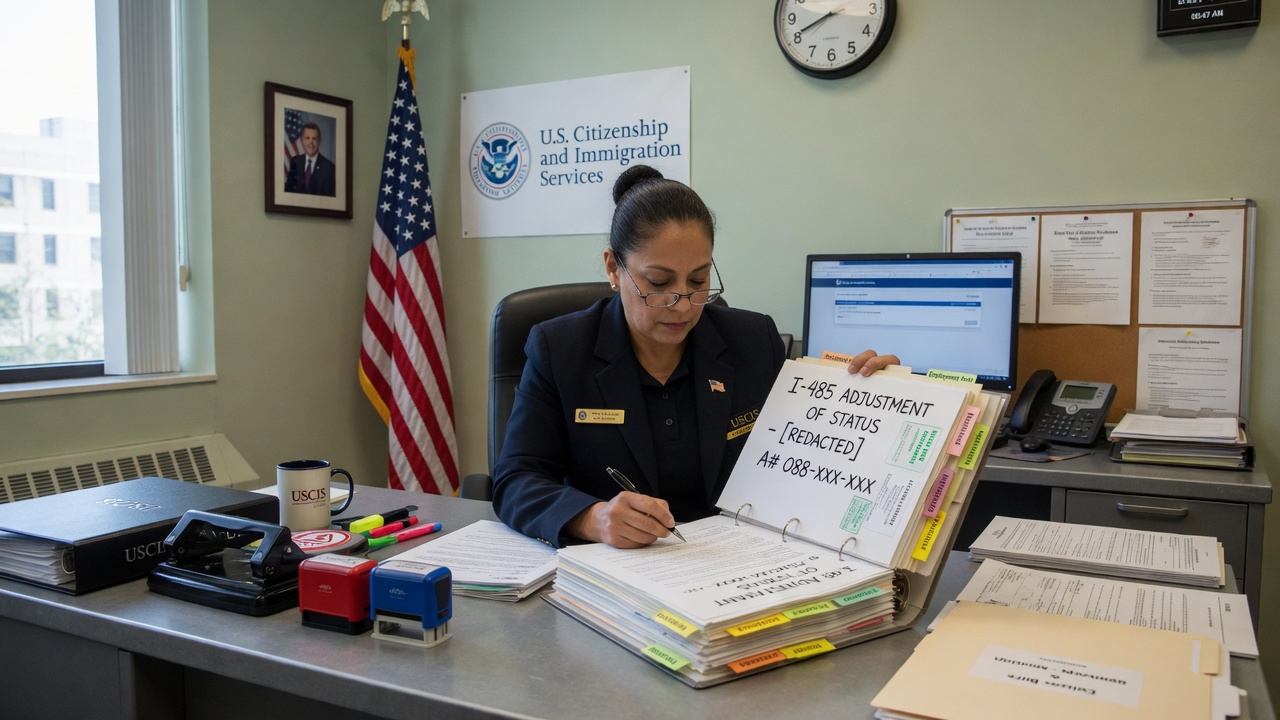
Your attorney or, if you are preparing yourself, should organize the positive equities materials as a clearly labeled separate section of the I-485 file — not mixed in with the standard eligibility documents. The officer needs to be able to find and review the positive equities materials efficiently. A table of contents, clearly labeled tabs, and a brief cover letter explaining the positive equities case you are presenting will help ensure the officer engages with the material rather than setting it aside as something to read later.
The Practical Impact: What Has Changed at USCIS Interviews
Practitioners who have appeared at USCIS offices since the memo took effect are already seeing the change. Officers who previously focused their interviews almost entirely on verifying the bona fides of the underlying relationship — asking questions about how the couple met, the living situation, the joint finances — are now also asking questions that probe the positive equities analysis directly.
Officers are asking applicants to describe their involvement in their children's lives in specific detail. They are asking about tax filing history and whether the applicant has copies of returns. They are asking about employment — not just the current job, but the employment history over time and the reasons for any gaps. They are asking about community involvement and charitable activity. They are asking about any prior criminal history, even arrests that did not result in charges, and following up with questions about what the applicant has done since then.
For applicants who have prepared specifically for these questions — who have the positive equities package in hand and who have rehearsed the key points with their attorney — these questions are an opportunity. For applicants who arrived prepared only for the eligibility questions, they can be disorienting and can lead to incomplete or unhelpful answers that leave the officer without the material needed to approve.
Officers are also, under the new memo, more likely to continue an interview rather than approve on the spot. An officer who is uncertain whether the positive equities are sufficient — because the applicant has not presented a clear positive case — may issue a Request for Evidence (RFE) or a Notice of Intent to Deny (NOID) rather than approving at the interview. This prolongs the process and creates uncertainty that could be avoided with proper preparation.
"Before this memo, I could walk a client into an interview with their relationship documents, medical exam, and tax returns and feel reasonably confident that a clean case would go approval. That's not how it works anymore. Now I walk in with a full positive equities binder — tax transcripts, reference letters, hardship declarations, employment records, community documentation. The interview is a completely different animal."
What This Means for Pending Applications
If you already have an I-485 pending — filed before the June 2026 memo — you are not grandfathered under the old standard. The memo applies to all pending adjudications as well as new filings. If your case is still in the queue and has not been adjudicated yet, the officer who eventually reviews it will apply the new framework.
This means that if you filed your I-485 before the memo issued, you should be actively supplementing your file with positive equities documentation now — before your interview is scheduled, not after. The standard practice of filing and waiting is no longer a viable strategy if it means arriving at the interview without a positive equities package. If your interview is already scheduled, the time to prepare is immediately.
The other implication for pending applications is that cases that might have been approved under the old standard — borderline cases where there were some negative factors but no clear bars to eligibility — are now at significantly higher risk of denial or at least RFE under the new one. The margin for error has shrunk. Cases that previously would have passed through on the strength of technical eligibility alone now need to be built into the strongest possible positive case before they reach an officer's desk.
A Note on the Legal Authority Behind the Memo
It is worth being direct about what the memo is and is not. It is an internal USCIS policy directive — not a regulation, not a statute, and not a rule that was published for public notice and comment under the Administrative Procedure Act. It instructs officers on how to exercise discretion; it does not change the legal standards for eligibility.
The underlying law — that adjustment of status is a discretionary benefit, that officers may weigh positive and negative equities, and that an applicant bears the burden of demonstrating that a favorable exercise of discretion is warranted — has not changed. What has changed is the internal enforcement of that authority: officers are now explicitly trained and directed to use the discretionary tools the law has always given them, in a structured and mandatory way.
This distinction matters for a few reasons. First, it means that applicants who are denied on discretionary grounds under the new framework cannot simply point to the memo as legally defective — the underlying authority for discretionary denials has always existed. Second, it means that the memo could be revised or rescinded by a future administration without going through the formal rulemaking process, just as it was issued without that process. And third, it means that compliance with the memo's framework is not itself subject to judicial review in the same way that a formal rulemaking would be — courts reviewing discretionary denial decisions give USCIS substantial deference.
What this means for applicants in practical terms is this: do not count on a court to rescue you from a discretionary denial under the new framework. The time to prevent a denial is before the interview, not after it — through preparation, documentation, and advocacy that makes the strongest possible affirmative case for adjustment.
Frequently Asked Questions
What is the new USCIS positive equities memo and when does it take effect?
The USCIS June 2026 Adjustment of Status Discretion Policy Memorandum is an internal agency directive that changes how immigration officers evaluate Form I-485 applications. It took effect immediately upon issuance and applies to all pending and new I-485 adjudications. Under the memo, officers must conduct an explicit positive equities analysis — weighing specific favorable factors against unfavorable ones — and affirmatively conclude that the balance justifies adjustment of status. The old passive standard, under which technical eligibility combined with the absence of red flags typically resulted in approval, is no longer operative.
Can USCIS deny my I-485 even if I am technically eligible for a green card?
Yes. Adjustment of status has always been a discretionary benefit under 8 U.S.C. § 1255, and USCIS has always had the legal authority to deny an eligible applicant on discretionary grounds. The June 2026 memo formalizes and operationalizes that authority by requiring officers to conduct an explicit positive equities analysis for every application. Technical eligibility — meeting the sponsoring relationship requirements, clearing the medical exam, passing the background check — is necessary but no longer sufficient. An officer must affirmatively find that the balance of positive and negative equities warrants a grant. If you have not presented affirmative positive evidence, the officer may lack the material needed to approve even if there are no disqualifying factors.
What documents should I bring to my I-485 interview to show positive equities?
You should organize a positive equities package that includes: IRS tax transcripts and copies of federal and state tax returns for the past three to five years; an employment verification letter from your current employer and key prior employers; reference letters from at least three people who know you well — a religious leader, an employer, a community leader, or a neighbor — describing your character and contributions in specific terms; evidence of community involvement such as volunteer records, congregation membership documentation, or civic participation records; documentation of your U.S. citizen and LPR family ties, including birth certificates, school records, and photos; hardship declarations from qualifying family members if applicable; and complete court records plus rehabilitation documentation if you have any prior criminal history. Bring this as a separate, organized section of your file with a cover letter explaining the positive equities case you are presenting.
How does the new positive equities memo affect my I-485 interview?
Officers are now asking questions at interviews that probe the positive equities factors directly — your involvement in your children's lives, your tax filing history, your employment record over time, your community activities, and any prior criminal or immigration history. Interviews are no longer focused exclusively on verifying the bona fides of the underlying relationship. Applicants who arrive prepared only for relationship questions may find the new questions disorienting and may give incomplete answers that leave the officer without the material needed to approve. Officers who are not confident in the positive equities showing may issue a Request for Evidence or Notice of Intent to Deny rather than approving at the interview. Preparation specifically for the positive equities analysis — not just the eligibility analysis — is now essential.
Does the positive equities requirement apply to all I-485 categories?
Yes. The June 2026 memo applies to all I-485 adjustment of status applications, regardless of the underlying visa category. It affects immediate relatives of U.S. citizens, family preference applicants, employment-based petitioners, diversity visa winners, asylum-based adjustments, and special immigrant categories. It also applies to all pending applications, not just new filings. There is no exemption for any category or for applications filed before the memo issued. However, the practical weight of the positive equities analysis varies by case: a clean immediate-relative case with a long marriage, U.S. citizen children, consistent employment, and full tax compliance has strong built-in positive equities. A more complex case with any negative factors requires more deliberate preparation.
What happens if I receive a denial under the new standard? What are my options?
USCIS I-485 denials do not have a direct administrative appeal within USCIS — there is no BIA appeal of a denied adjustment application in the same way there would be for other benefits. However, you have several potential paths. If placed in removal proceedings after a denial, you can re-apply for adjustment before the immigration judge, where the discretionary analysis is conducted de novo. You may be able to file a new I-485 if your underlying petition remains valid and you address the issues that caused the prior denial. In some cases, a denial based on a legal error (rather than a purely discretionary finding) may be challengeable in federal court. An experienced immigration attorney can evaluate the specific grounds of your denial and advise on the strongest available path forward.
📋 Key Action Items Before Your I-485 Interview
- Tax audit: Pull IRS transcripts for the last five years. File any missing returns. Address any outstanding liabilities before the interview date.
- Gather reference letters: At least three specific, personal letters from an employer, clergy member, and community figure. No form letters.
- Document family ties: School and medical records for U.S. citizen children; joint financial records; photos organized by year.
- Prepare hardship declarations: Written, signed statements from qualifying U.S. citizen or LPR family members explaining the specific impact of a denial.
- Address all criminal history: Complete certified court records for every prior arrest or conviction; full rehabilitation documentation.
- Organize a positive equities binder: Separate from standard eligibility documents, with a table of contents and brief cover letter. Label every section clearly.
- Consult an attorney: The new memo creates risks that were not present before. Cases that were straightforward under the old standard may benefit from professional review under the new one.
This Is the Moment to Prepare — Not to Wait
The June 2026 USCIS positive equities memo is a fundamental change in how adjustment of status works. It does not change who is eligible. It changes what "eligible" means in practice — from a technical checklist that, if cleared, results in approval, to a holistic discretionary analysis in which the applicant must affirmatively make their case.
The applicants who are well-positioned under the new standard are the ones who treat their I-485 interview the way a trial attorney treats a hearing: they know what the decision-maker is looking for, they have evidence that addresses every relevant factor, they have anticipated the opposing considerations and prepared responses, and they present their case in an organized, clear, and compelling way. The applicants who are at risk are the ones who arrived at the interview expecting that clean eligibility documents would carry the case — because under the new standard, they will not.
At Modern Law Group, we have been tracking USCIS policy changes closely and have updated our I-485 preparation protocols to align with the new memo's requirements. We prepare positive equities packages for every client's adjustment case. We conduct full audits of tax history, criminal history, immigration history, and family and community ties before every interview. We draft reference letters, prepare hardship declarations, and address negative factors with clients before they walk into the USCIS office — because the time to deal with a negative factor is before the interview, not at it.
If you have a pending I-485 and have not yet had your interview, now is the time to review your file against the new positive equities framework — not after you receive an RFE or a NOID. If your interview is coming up soon, contact us immediately to assess what your current file contains and what needs to be added. If you have already received an unfavorable decision, we can evaluate your options and help you understand the best path forward.
I-485 Pending? Let's Review Your Positive Equities File.
The rules changed in June 2026. If your I-485 was filed under the old framework, your preparation needs to be updated. Modern Law Group can audit your file, identify gaps in your positive equities showing, and help you build the case you need for the new standard.
Schedule a Consultation (888) 902-9285